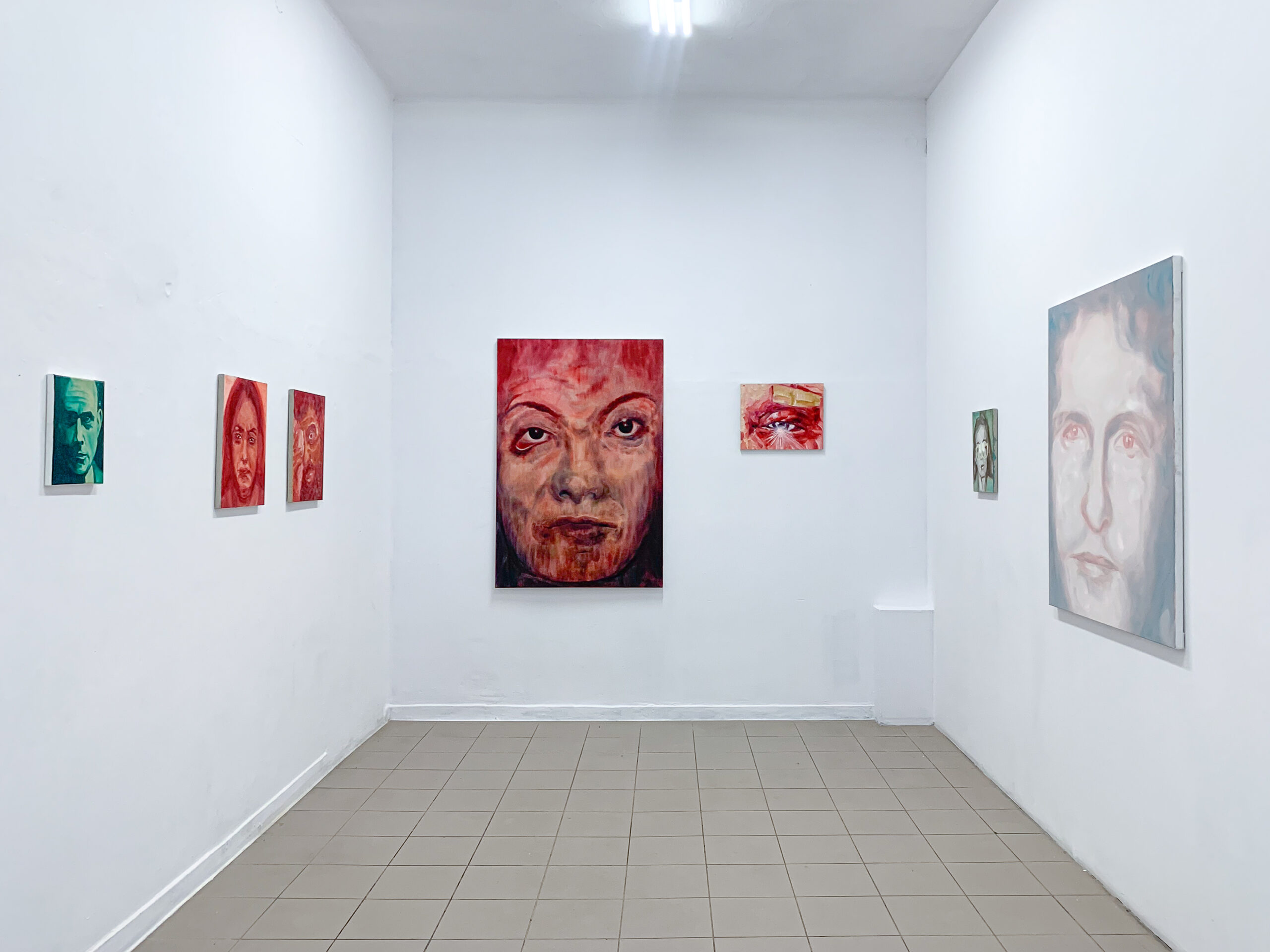
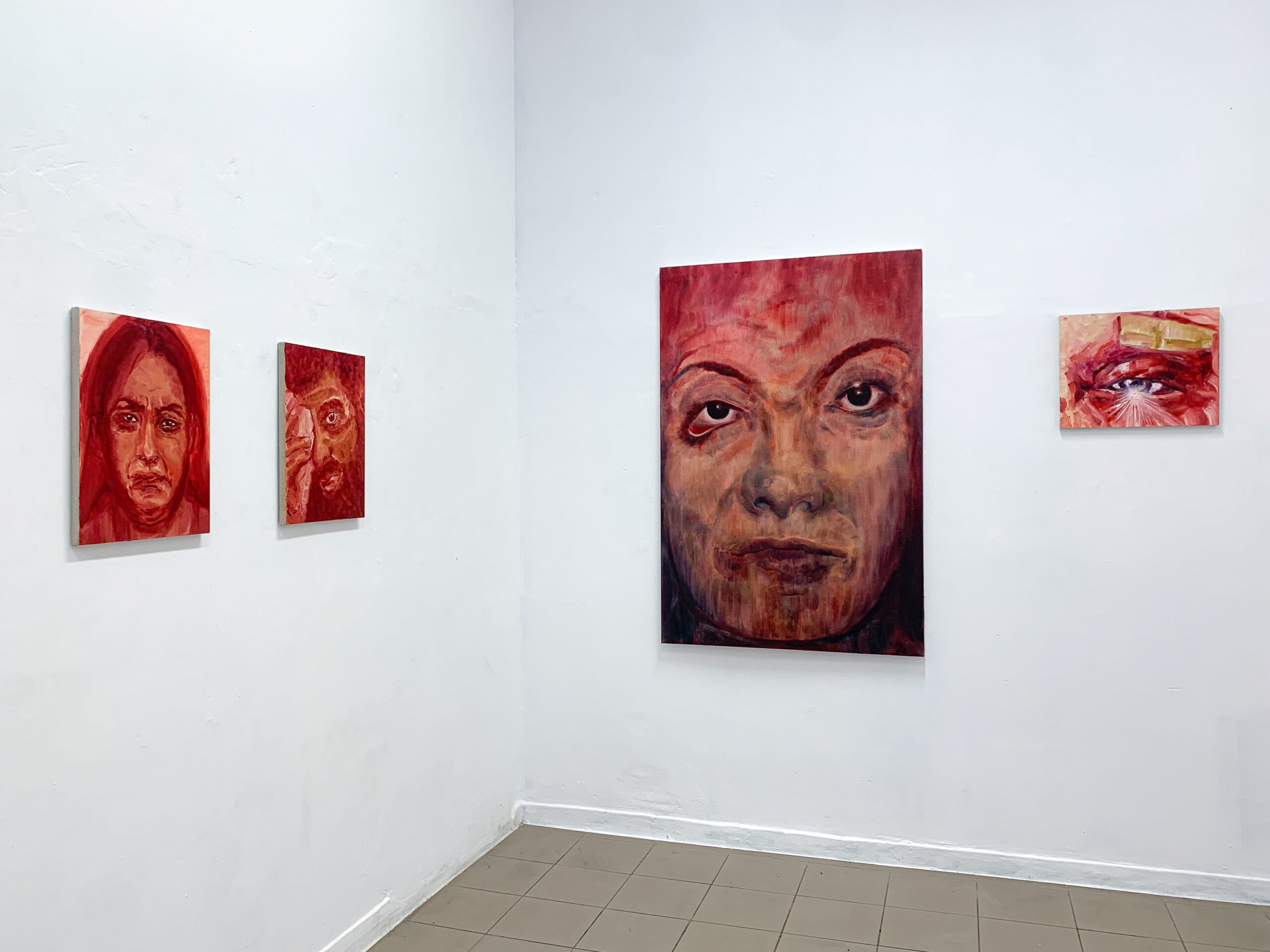
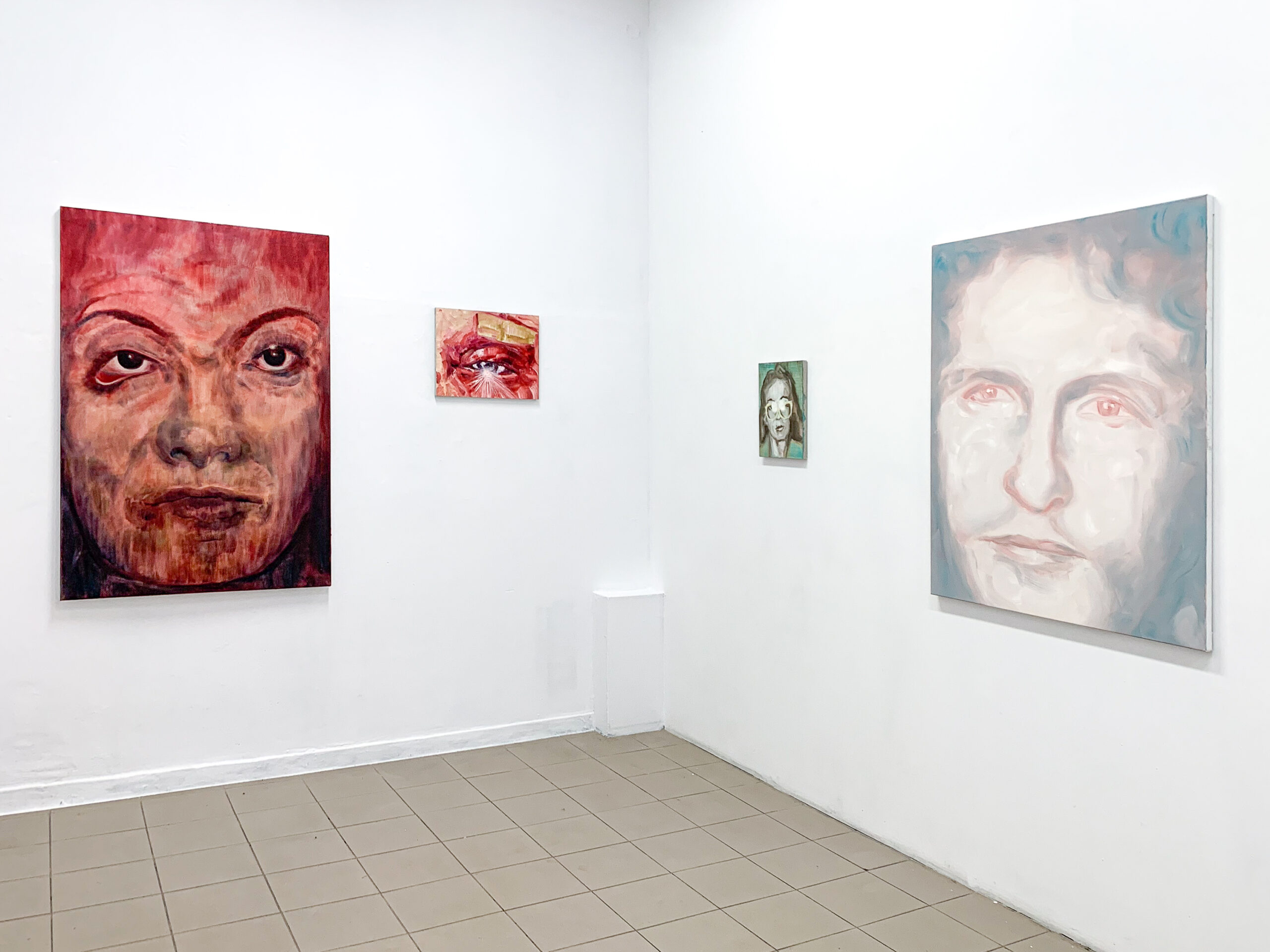
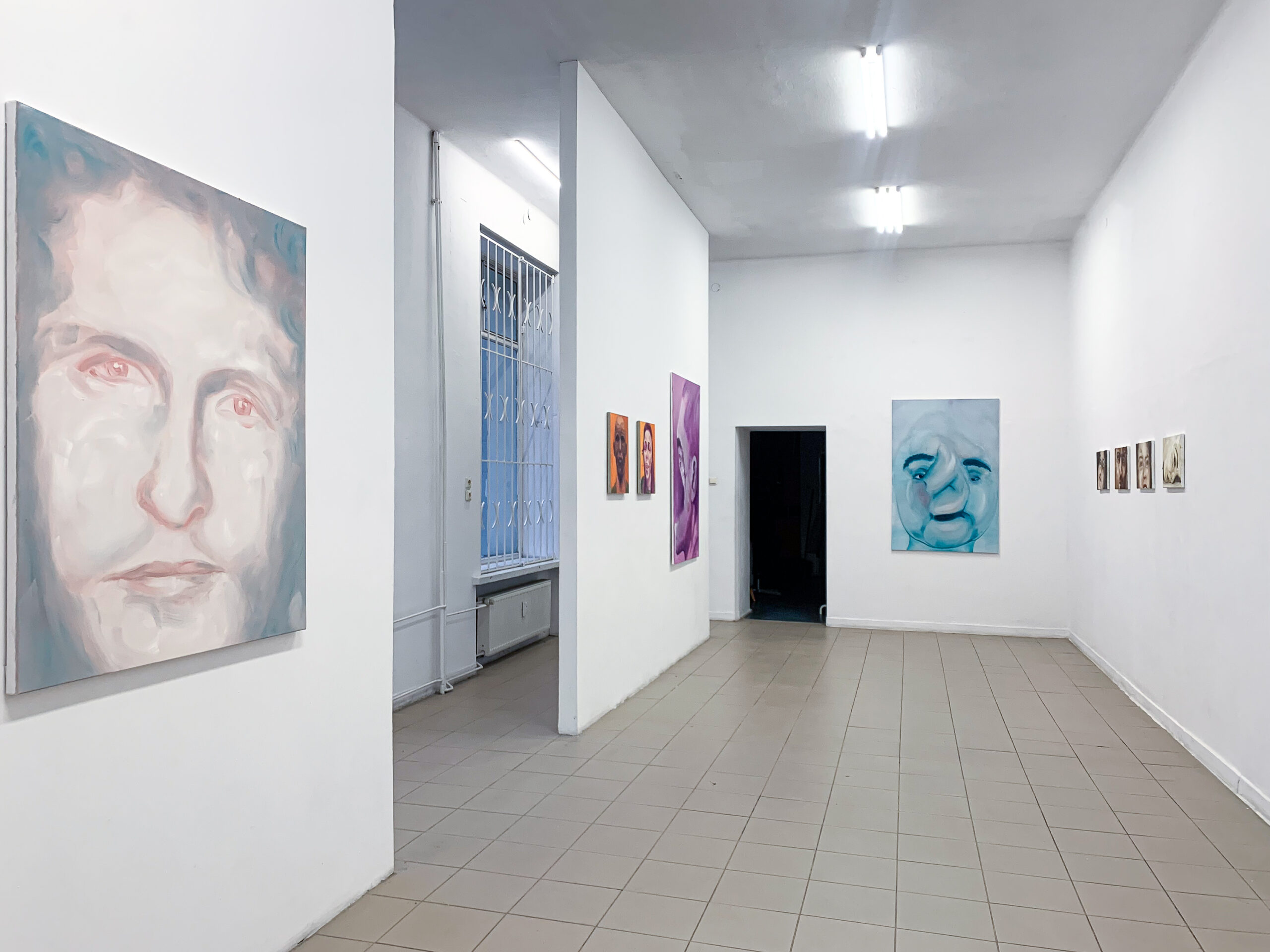
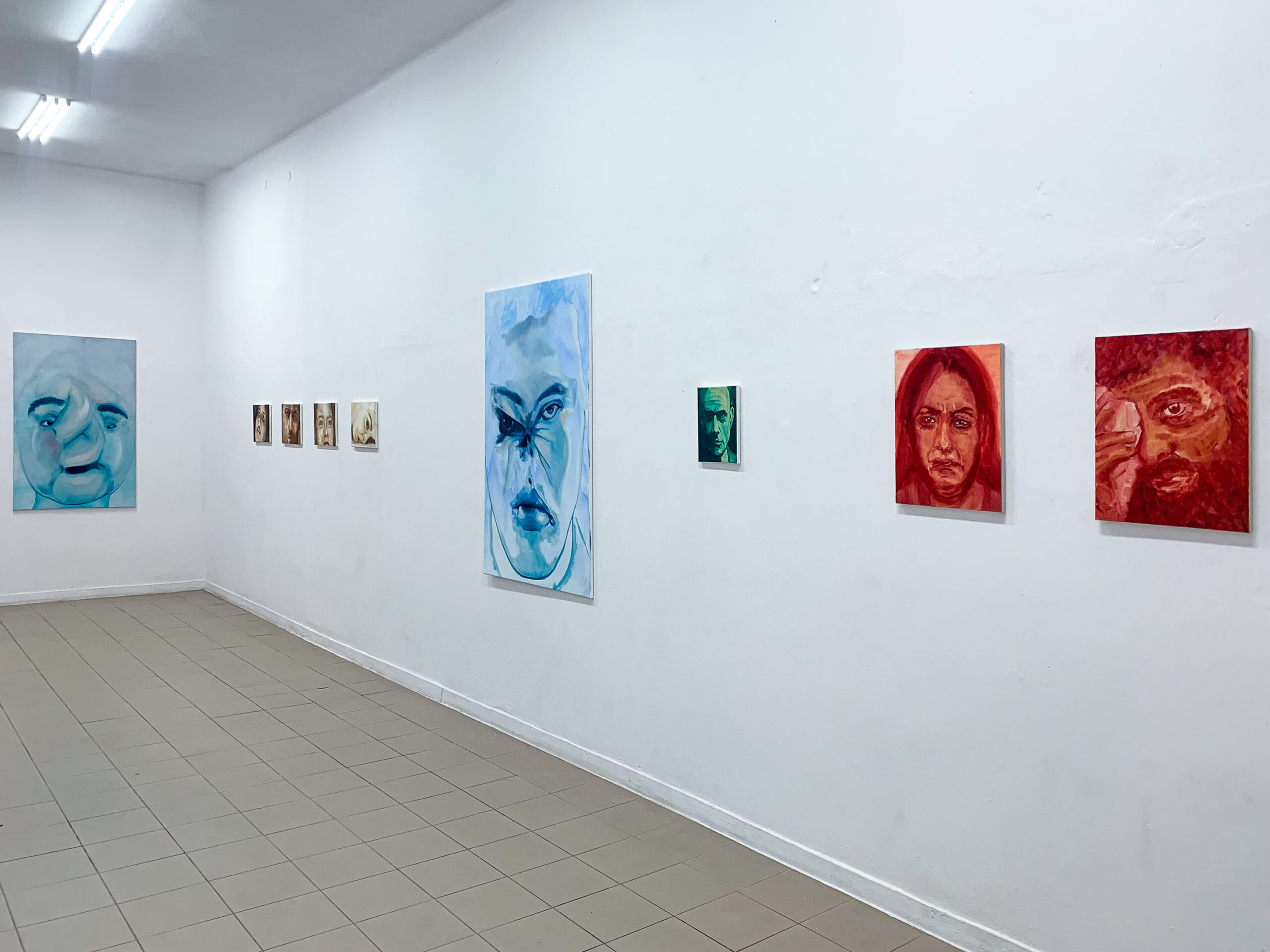
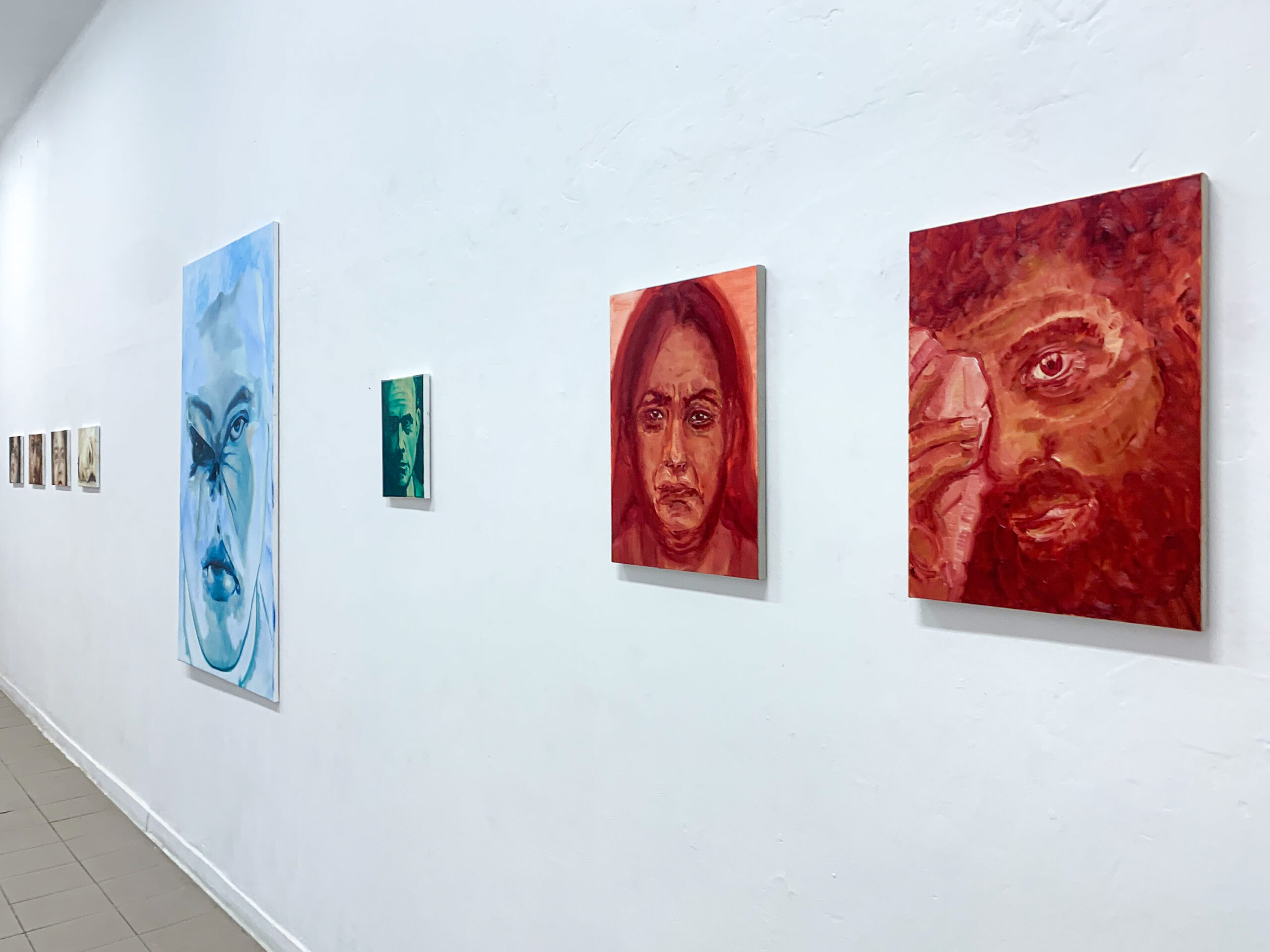
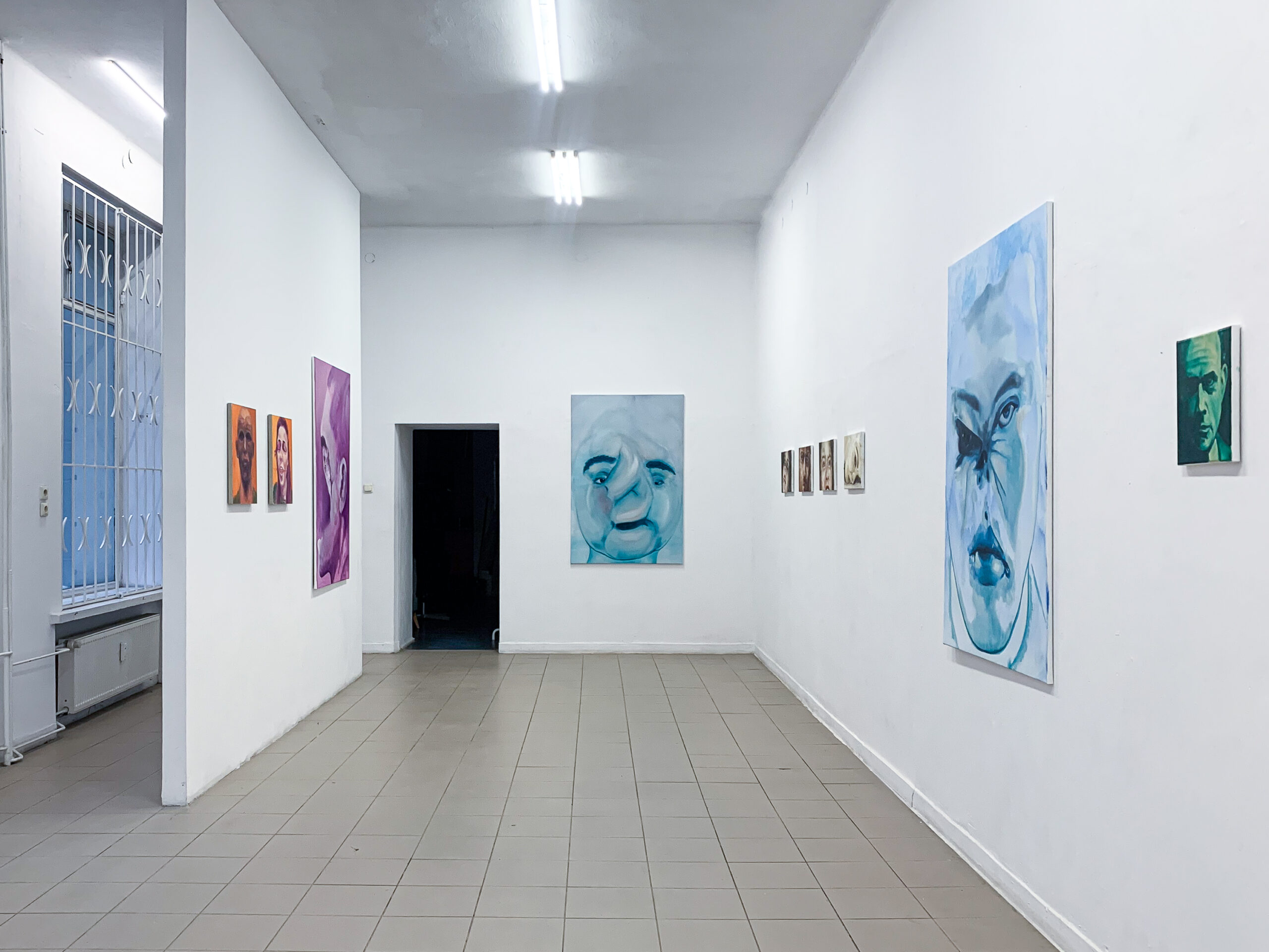
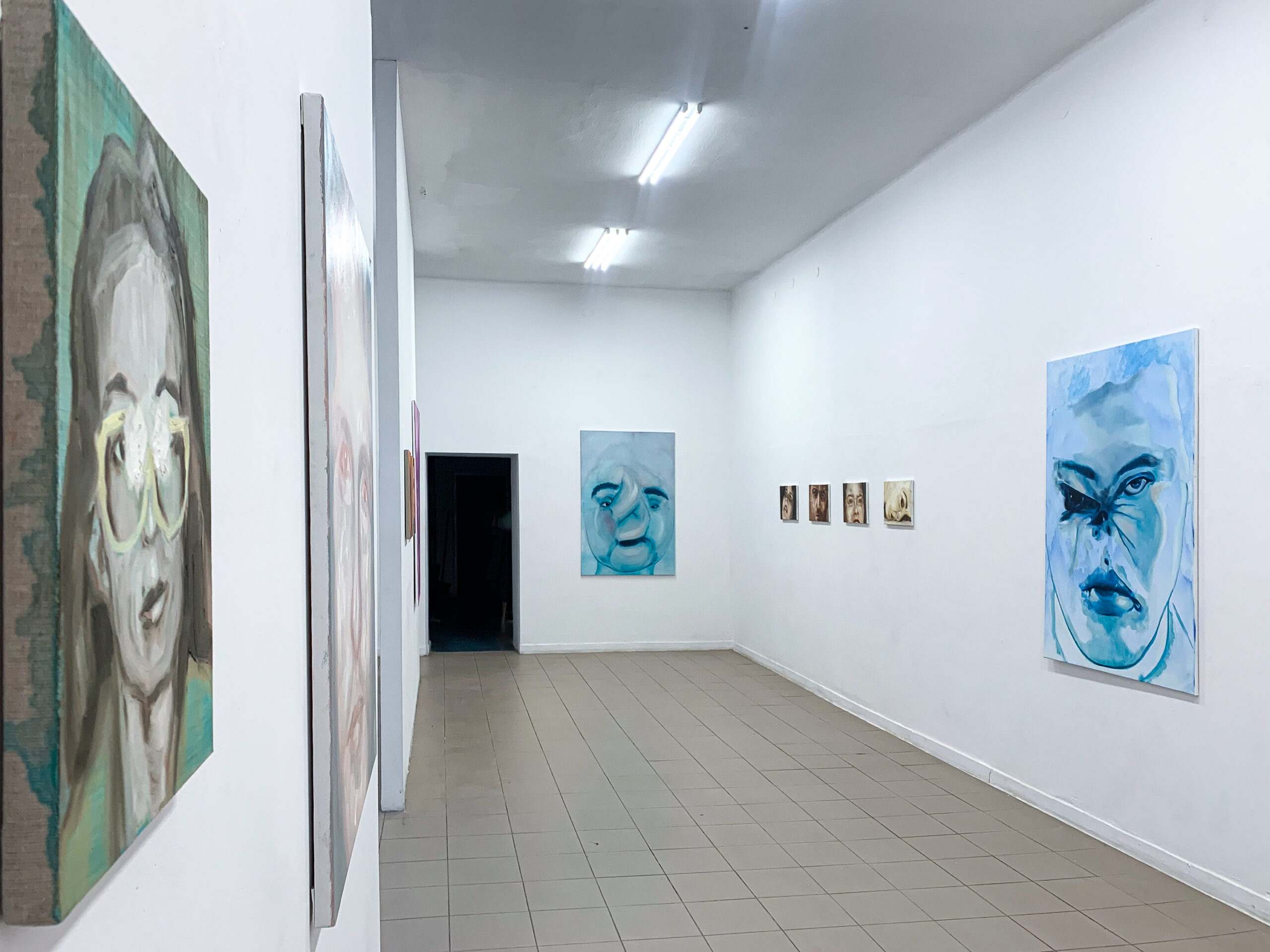
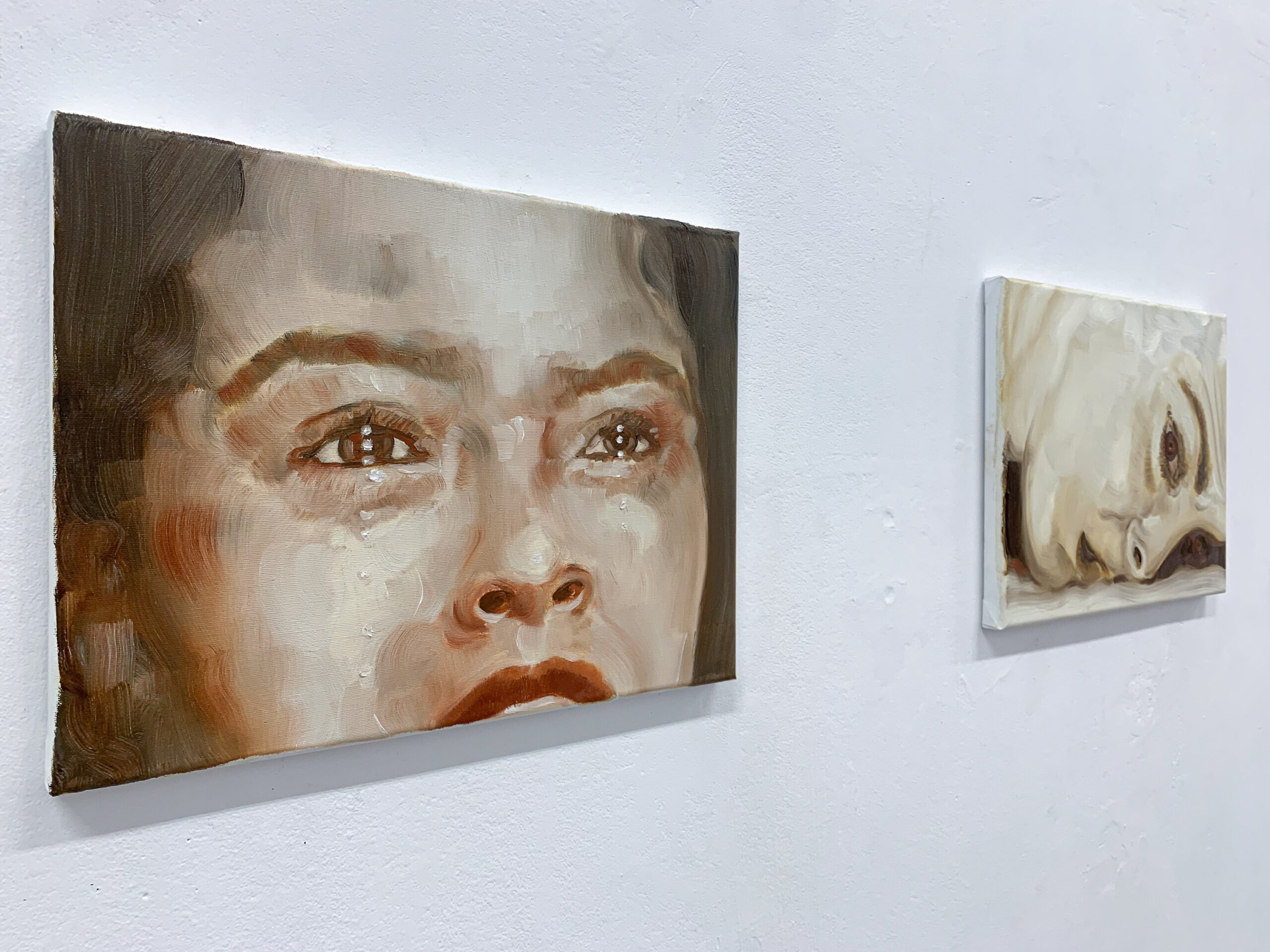
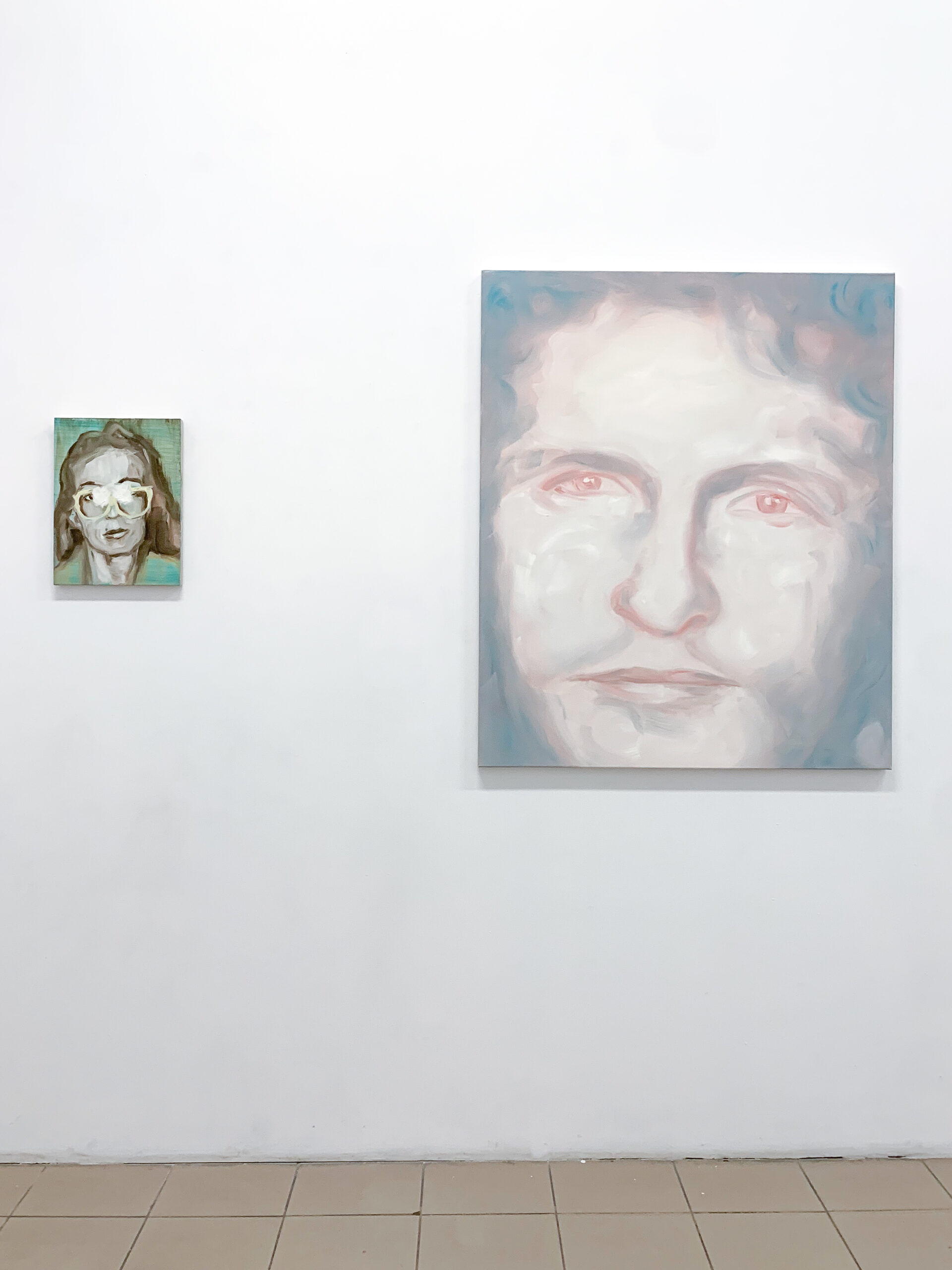
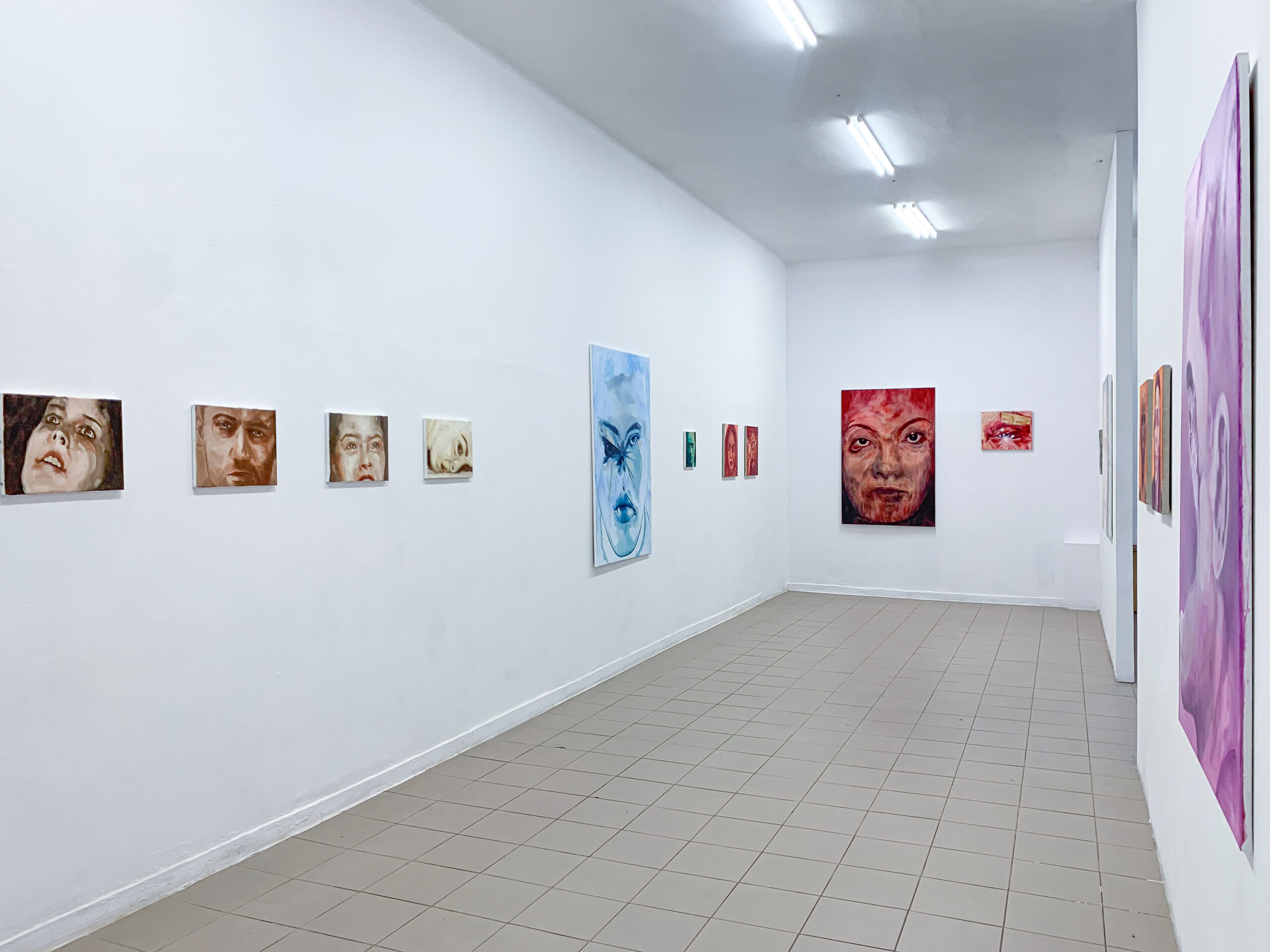
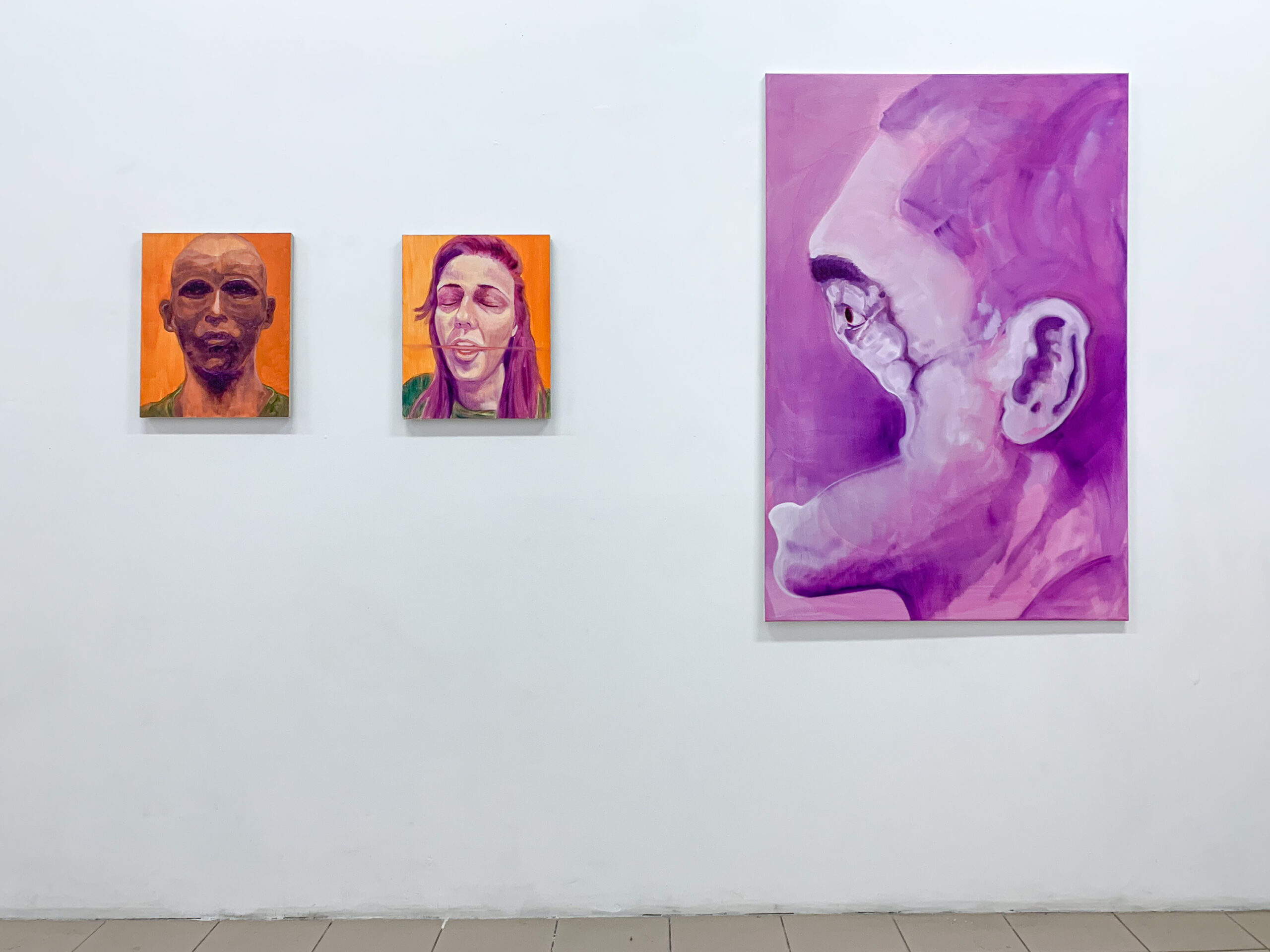
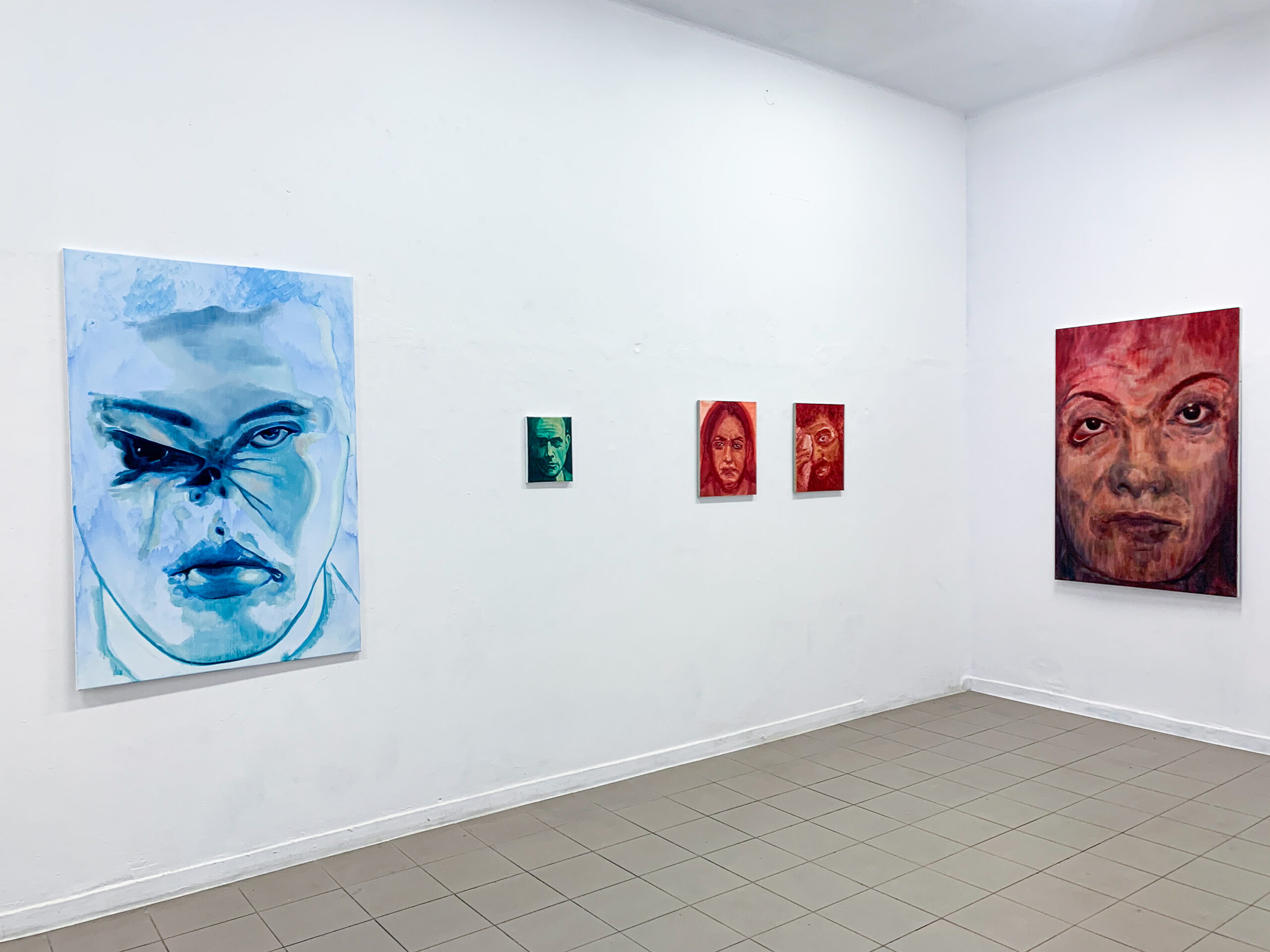
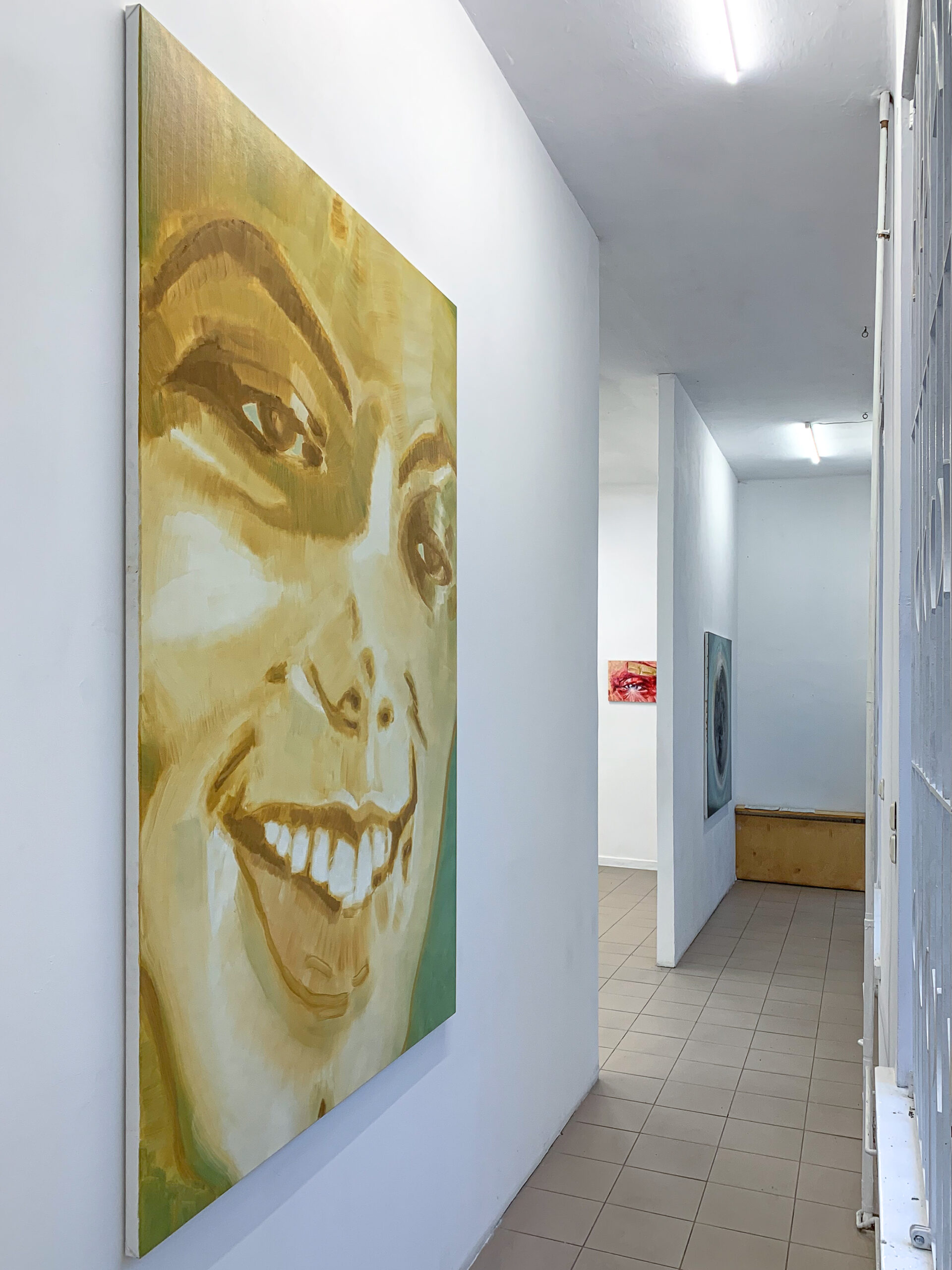
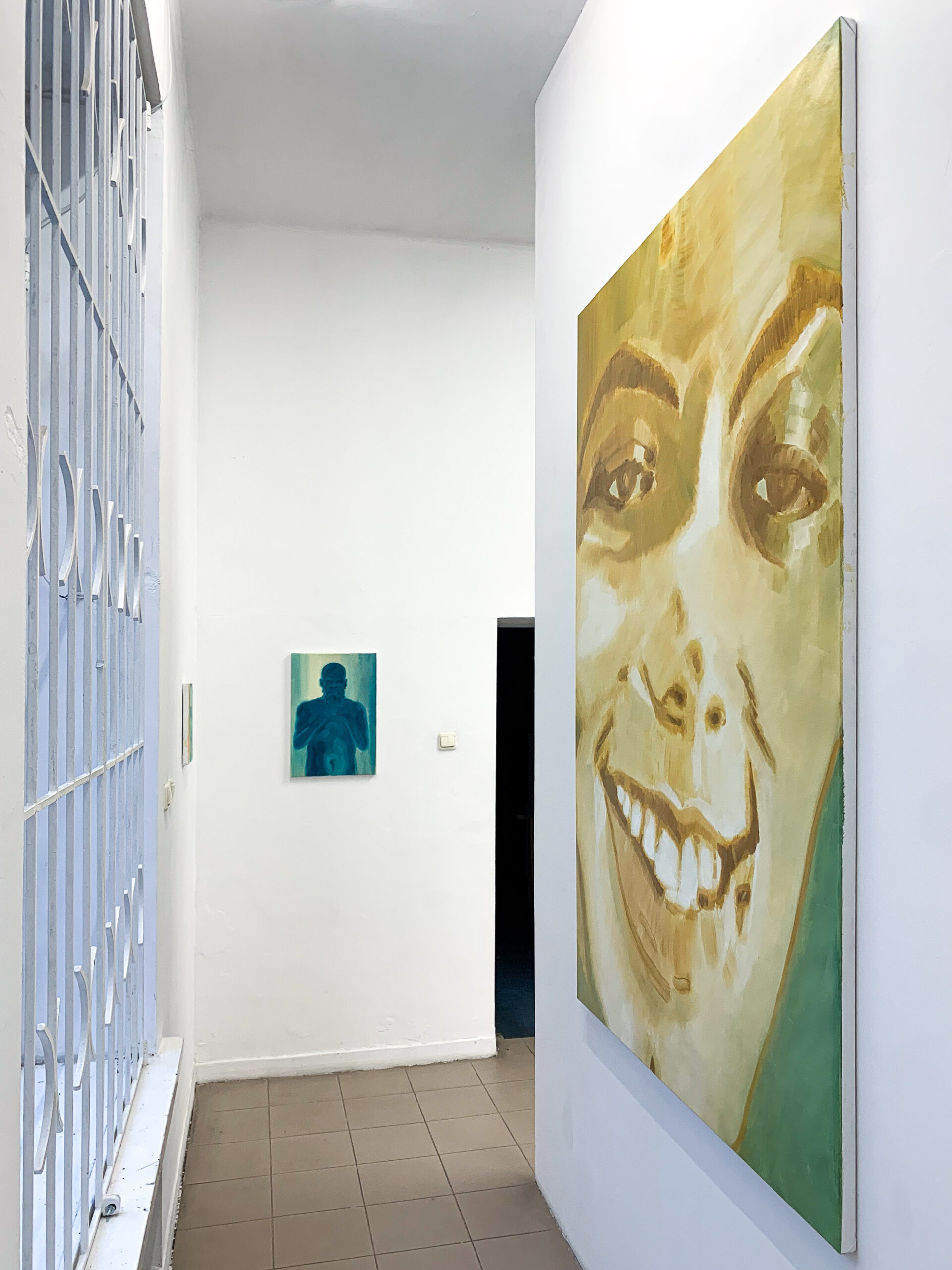
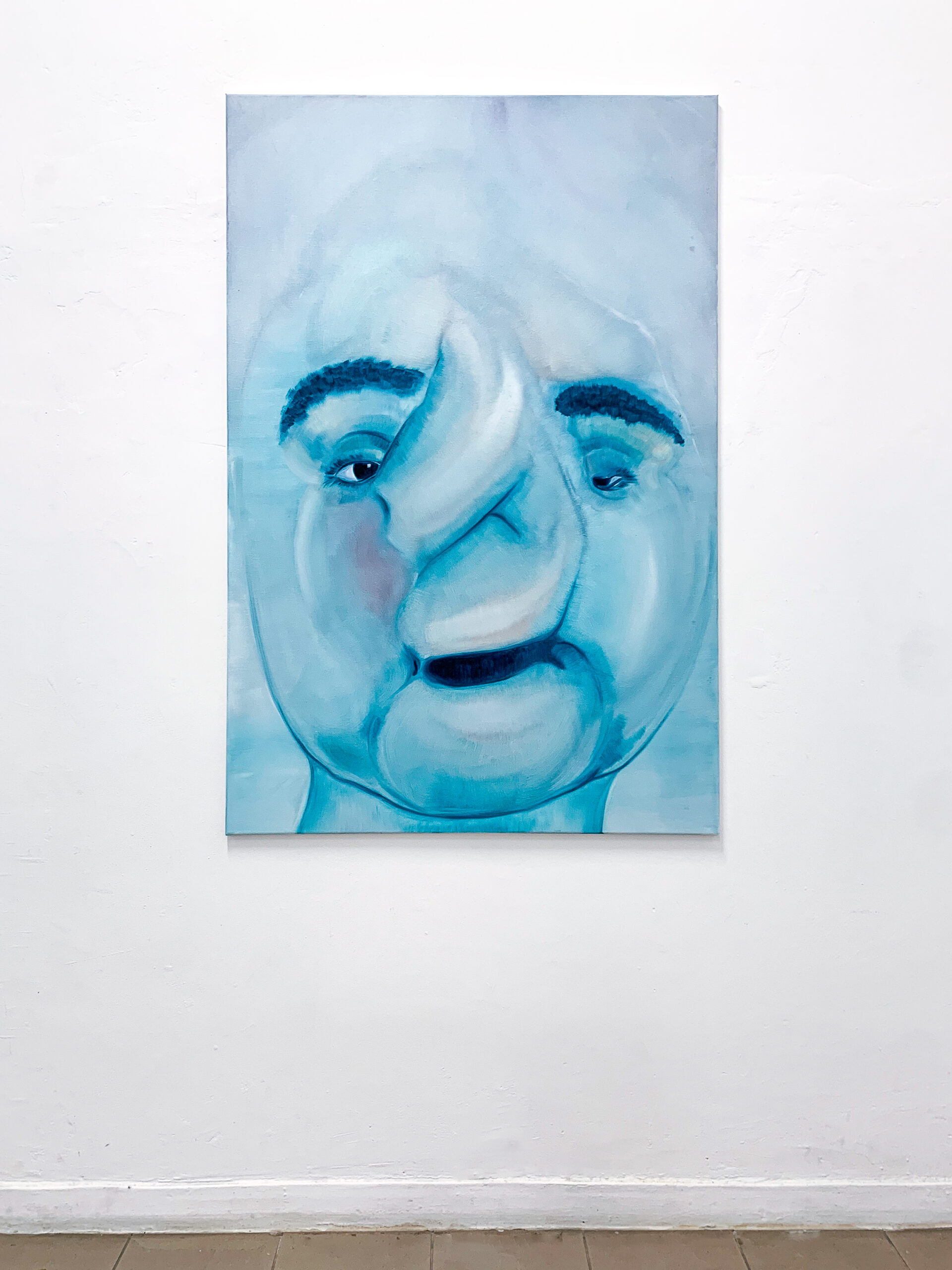
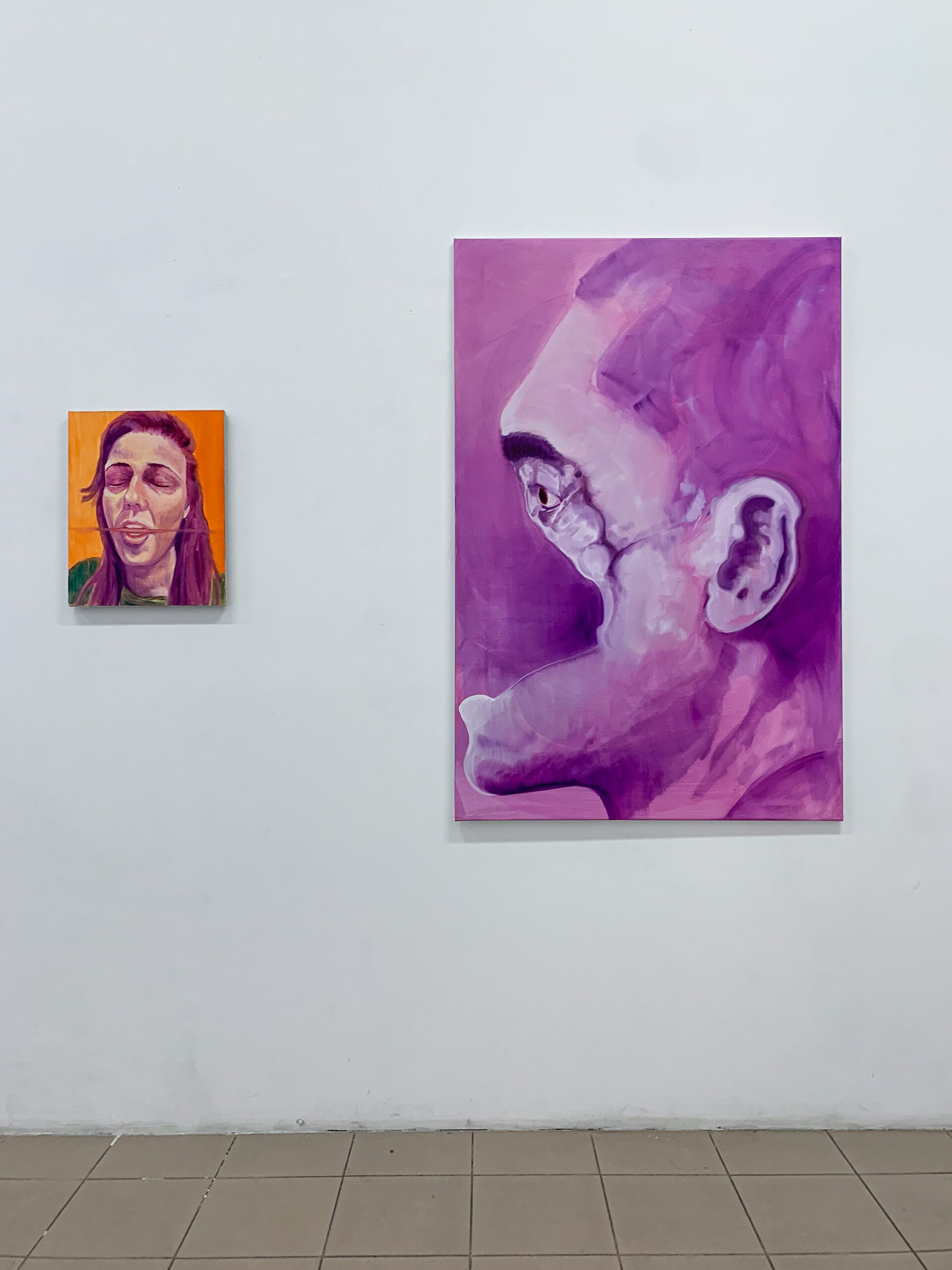
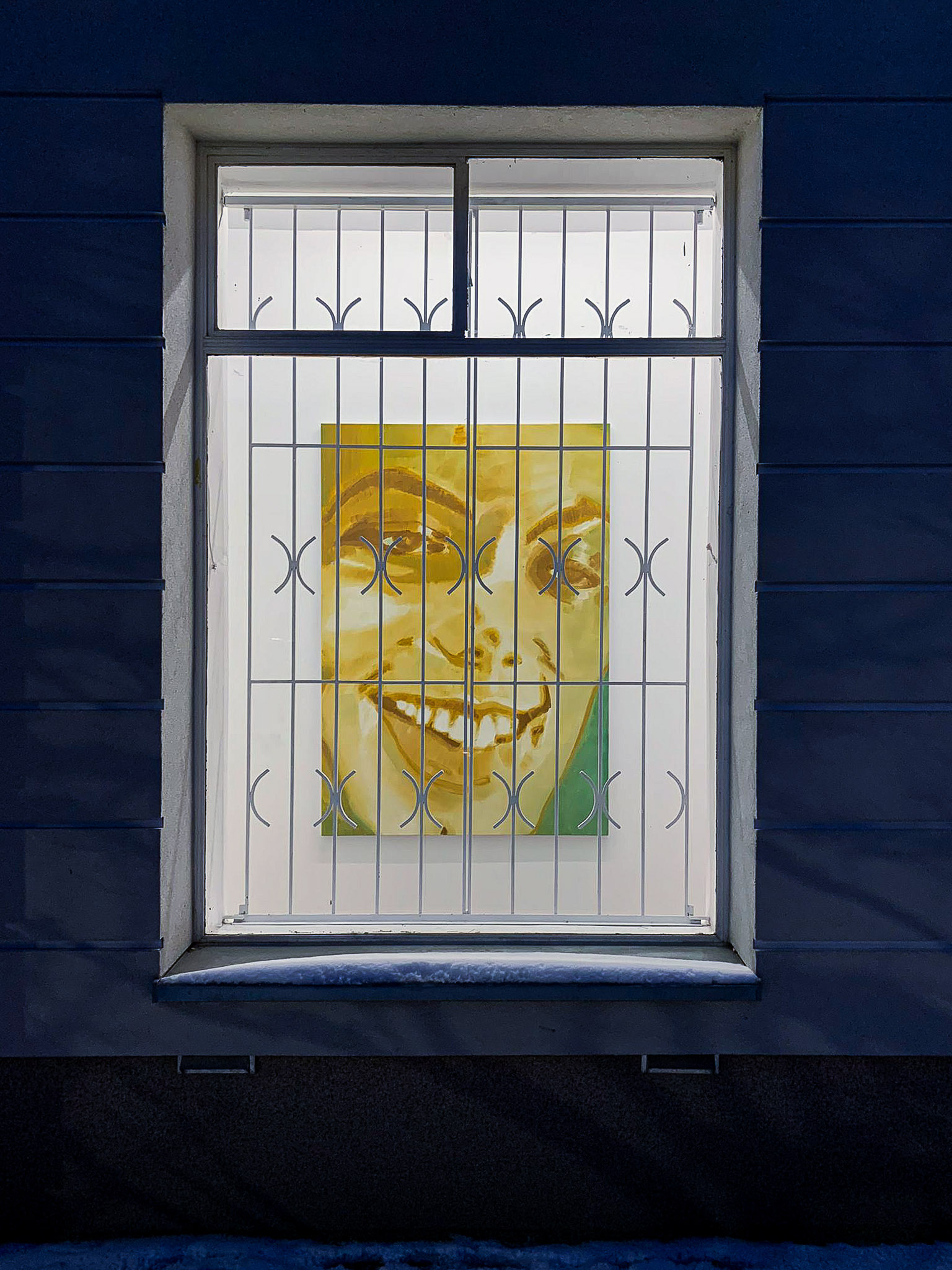
Łukasz Dziedzic, Painting, Malarstwo, audio-visual artist, musician, painter, art designer and curator. He creates videos, installations, music projects and has curated many exhibitions. Years later, he returns to the abandoned medium of painting, finding in this traditional technique the possibility of analysing irritating and uncomfortable subjects.
And When You Look At Me / A kiedy na mnie patrzysz
PL
Portret to jeden z najstarszych, najbardziej oczywistych tematów malarskich. W końcu to twarzą wchodzimy do świata. Twarz jest pierwszym elementem, który widzimy spotykając człowieka, często zanim pojawi się słowo, padnie pytanie. Poprzez doświadczenie stanięcia twarzą w twarz stajemy się świadkami obecności, która jest niepowtarzalna, zapisał kiedyś Emmanuel Levinas, francuski filozof. Według niego spotkanie z twarzą drugiego powinno wywoływać odpowiedzialność za nią, ponieważ widzimy w niej cierpienie, które budzi impuls do ochrony. Ale ta twarz, która ma budzić troskę, staje się często celem przemocy.
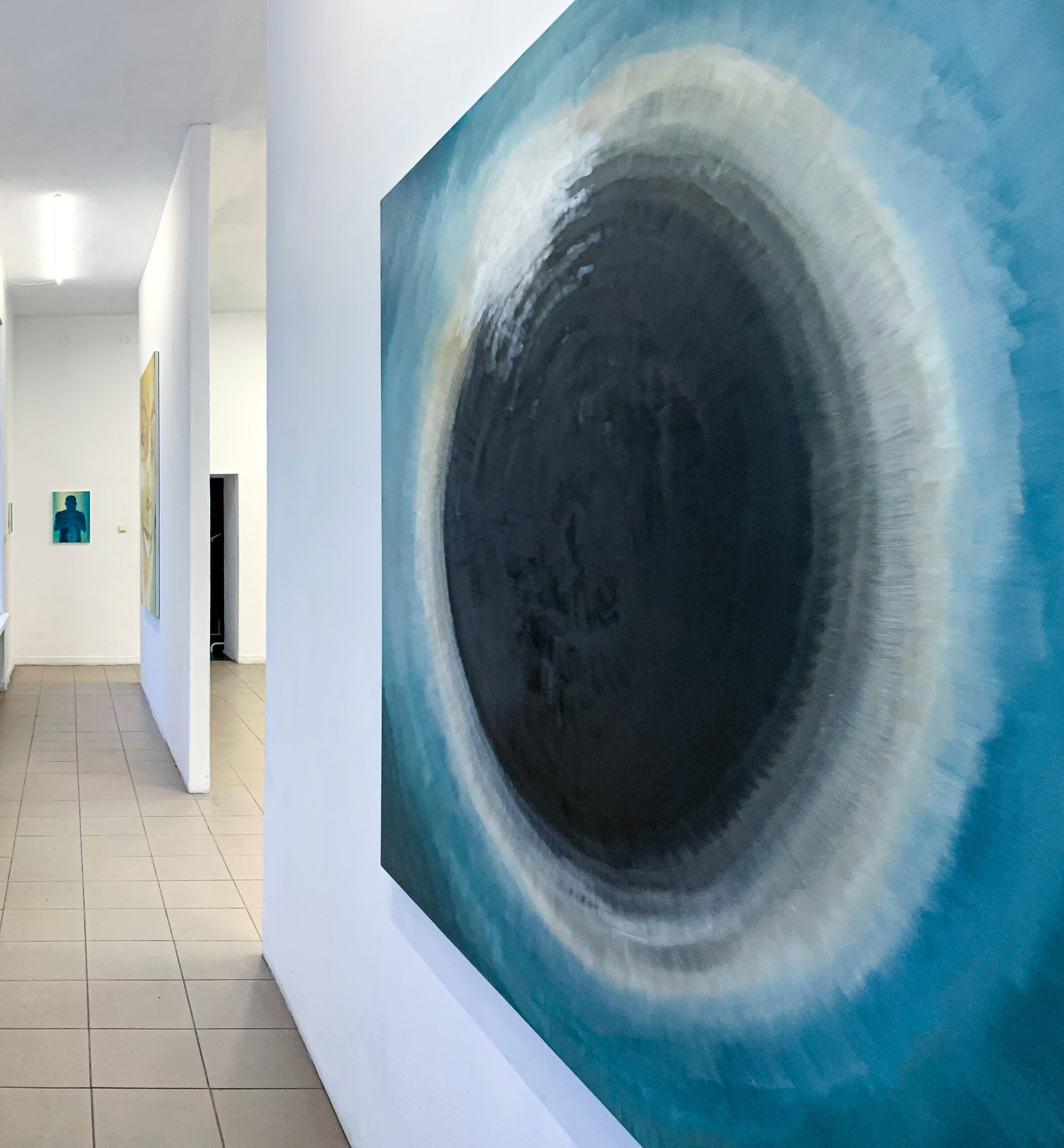
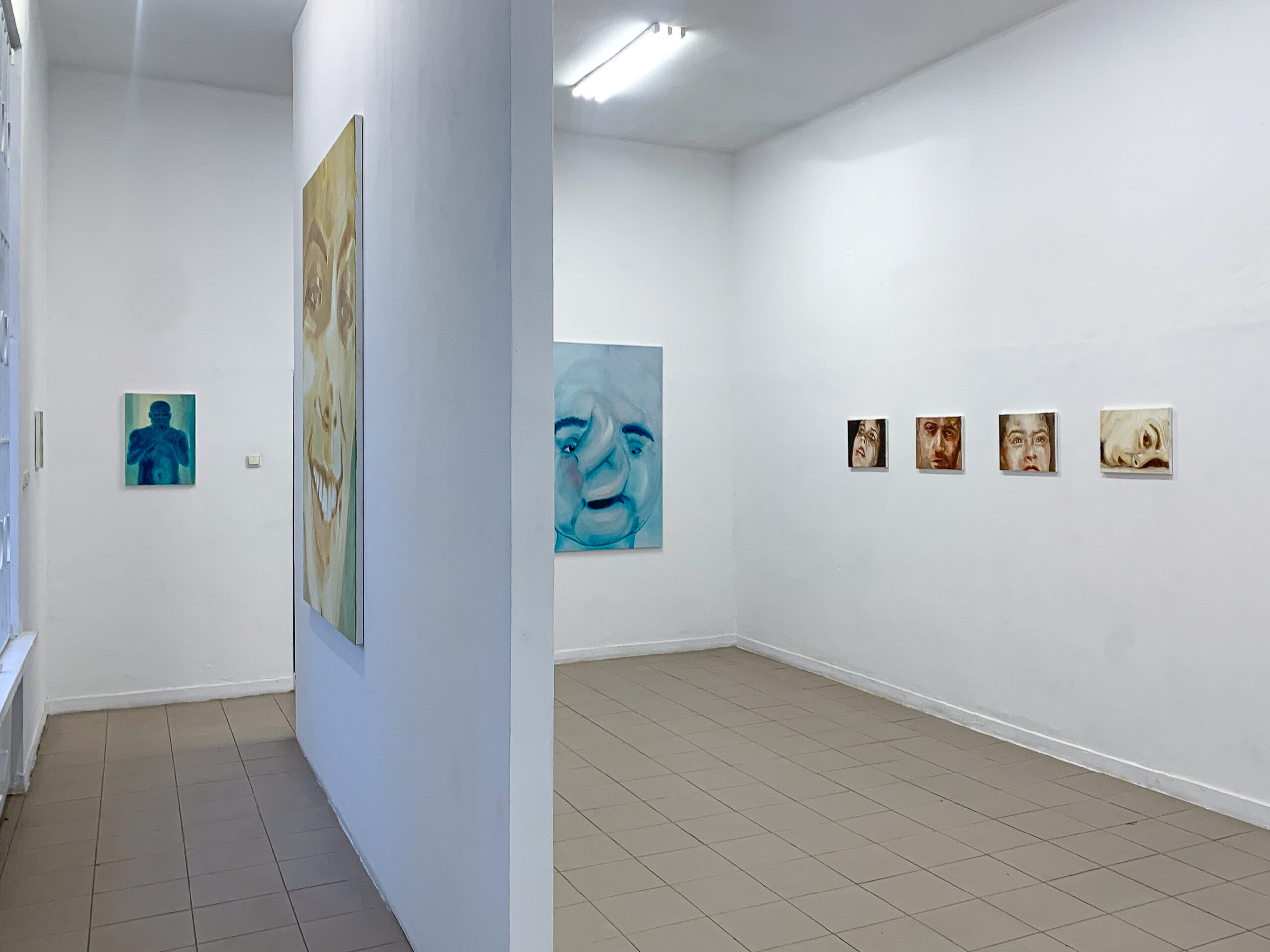
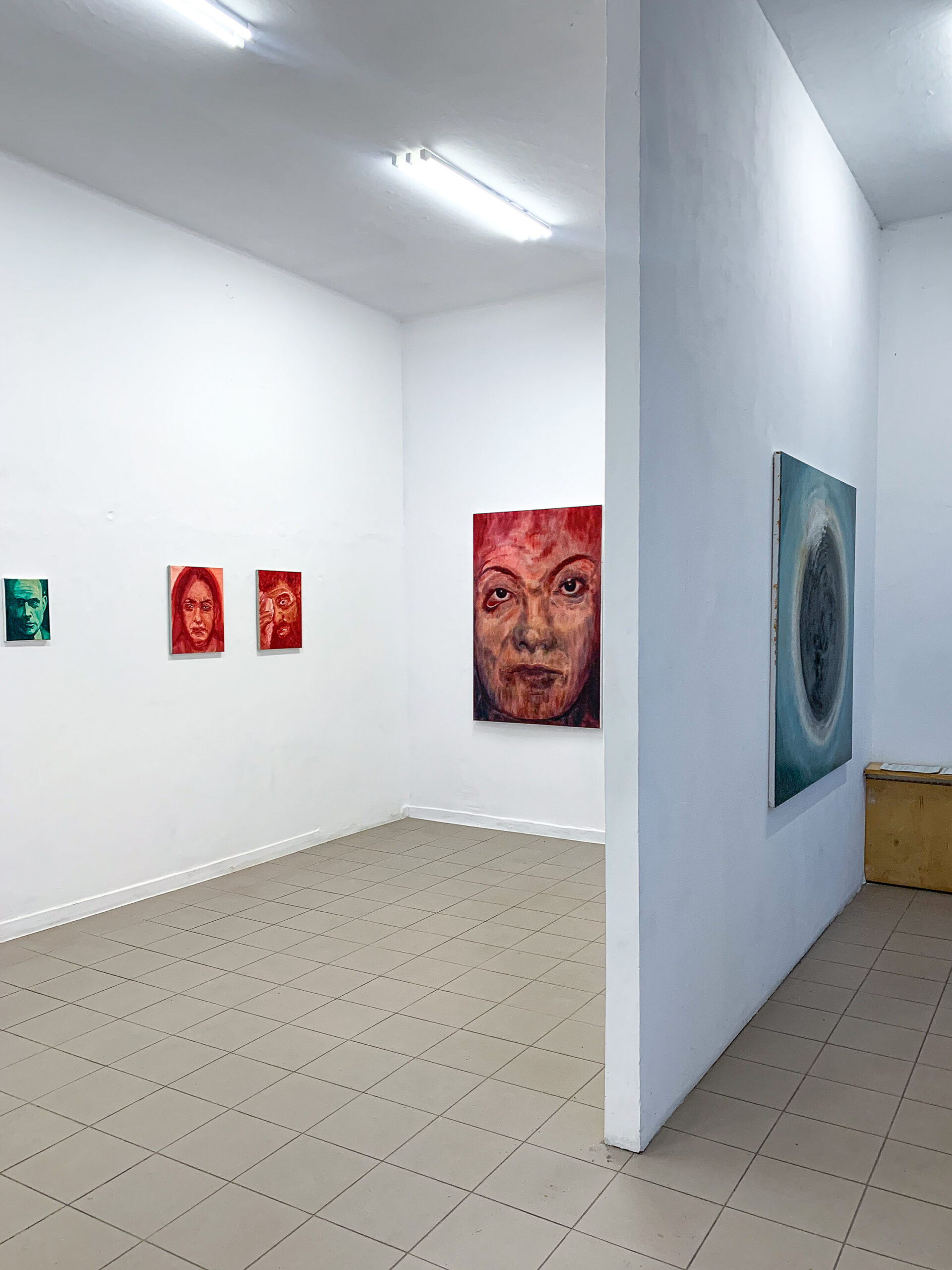
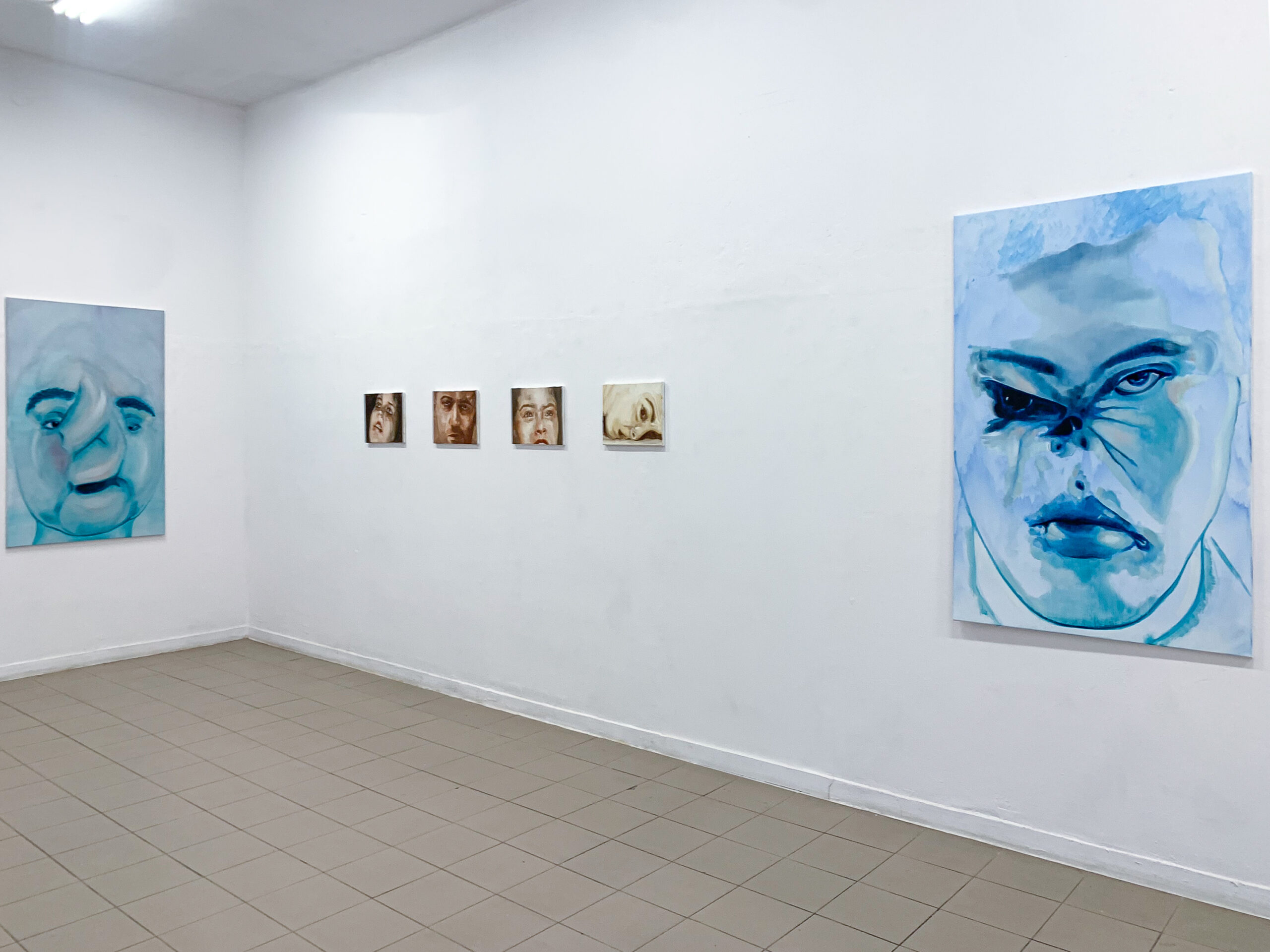
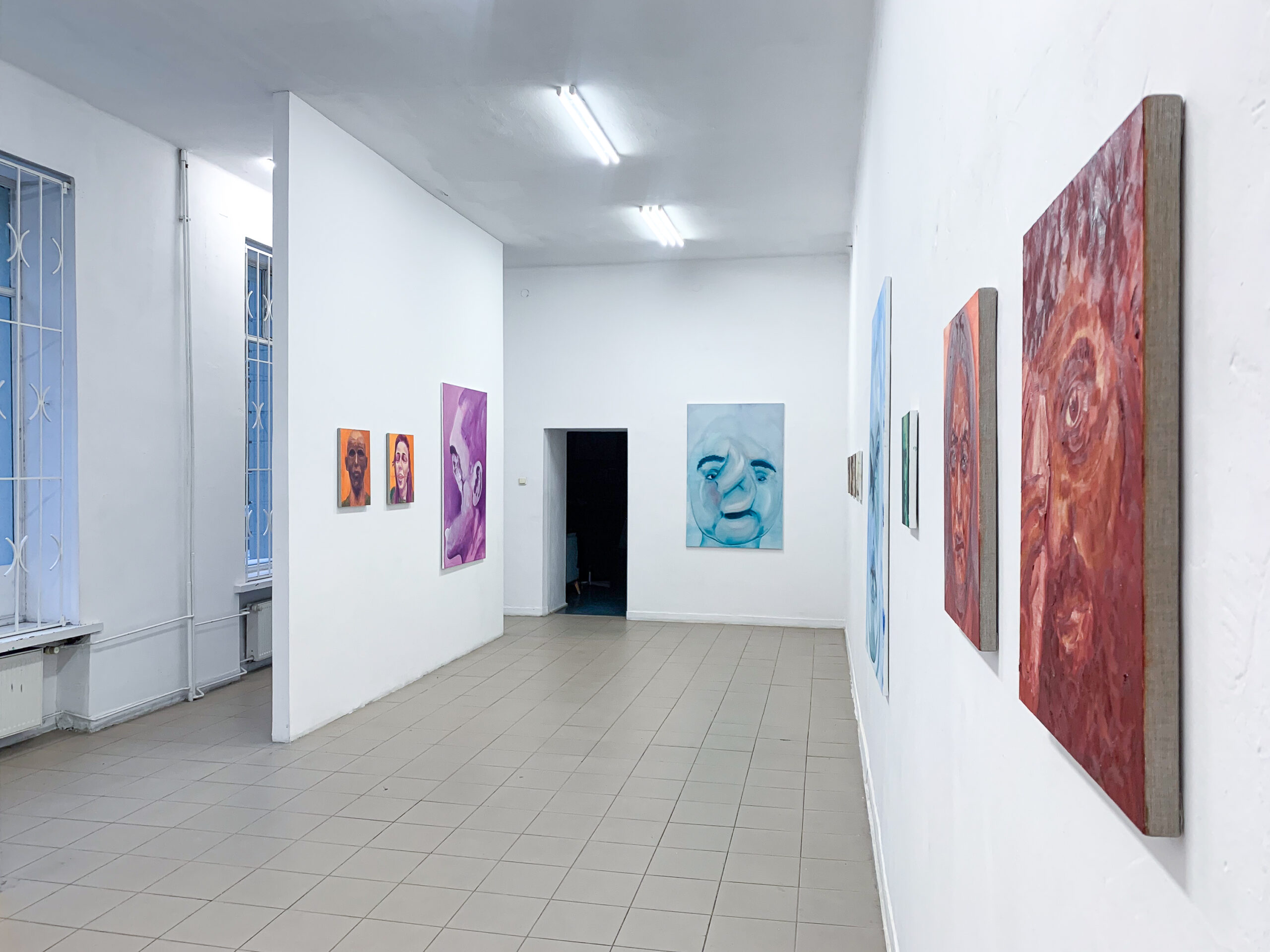
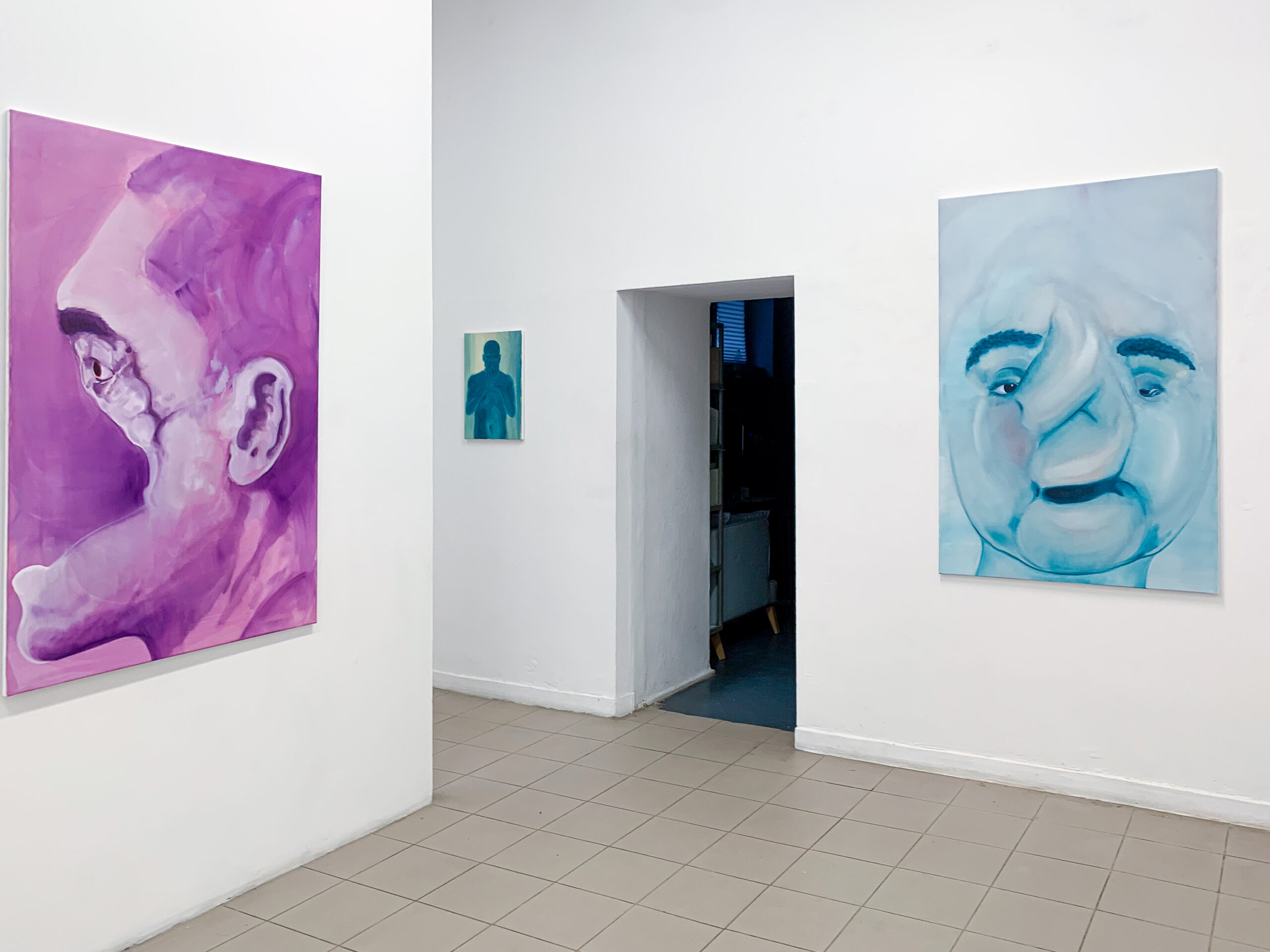
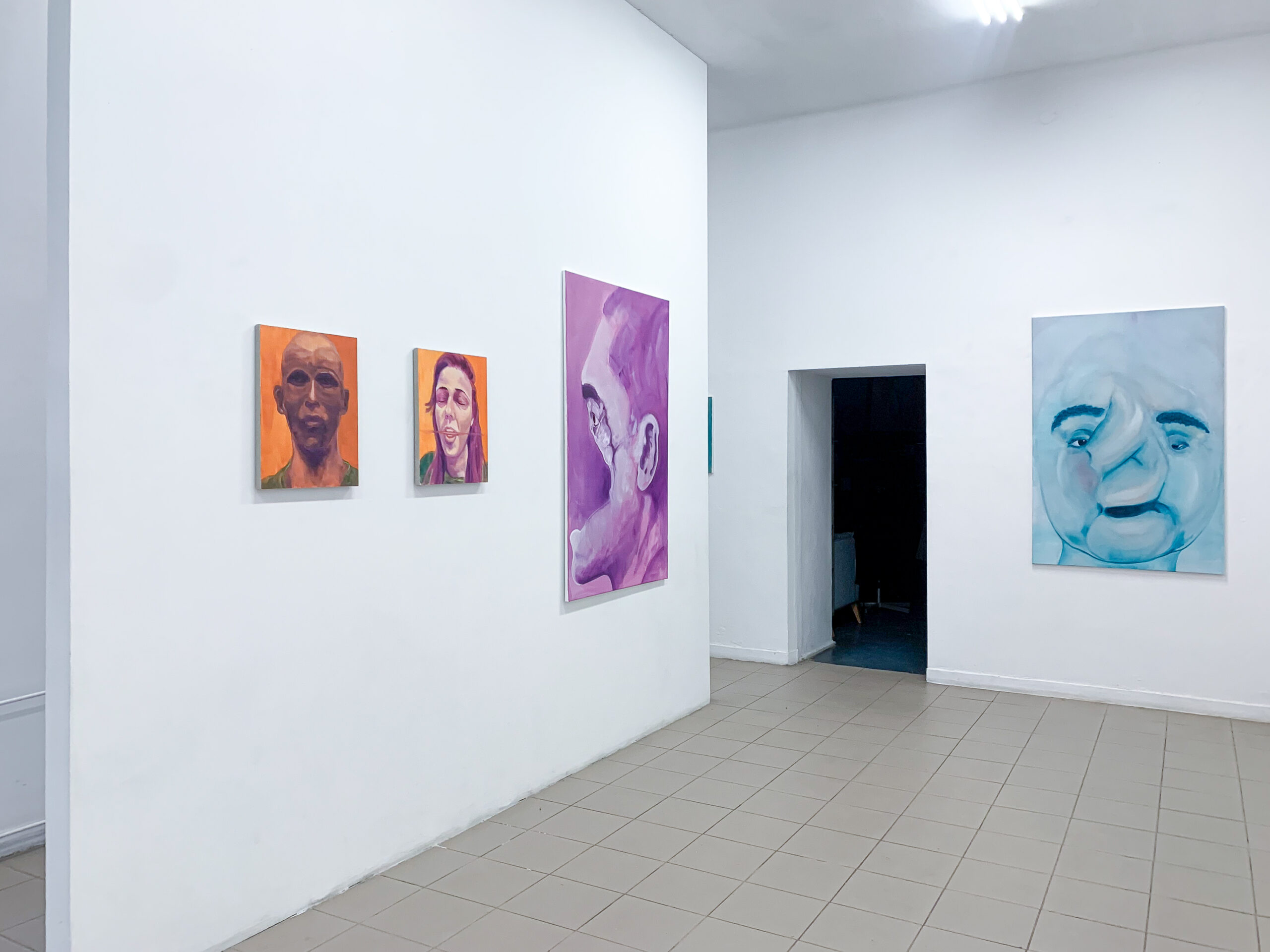
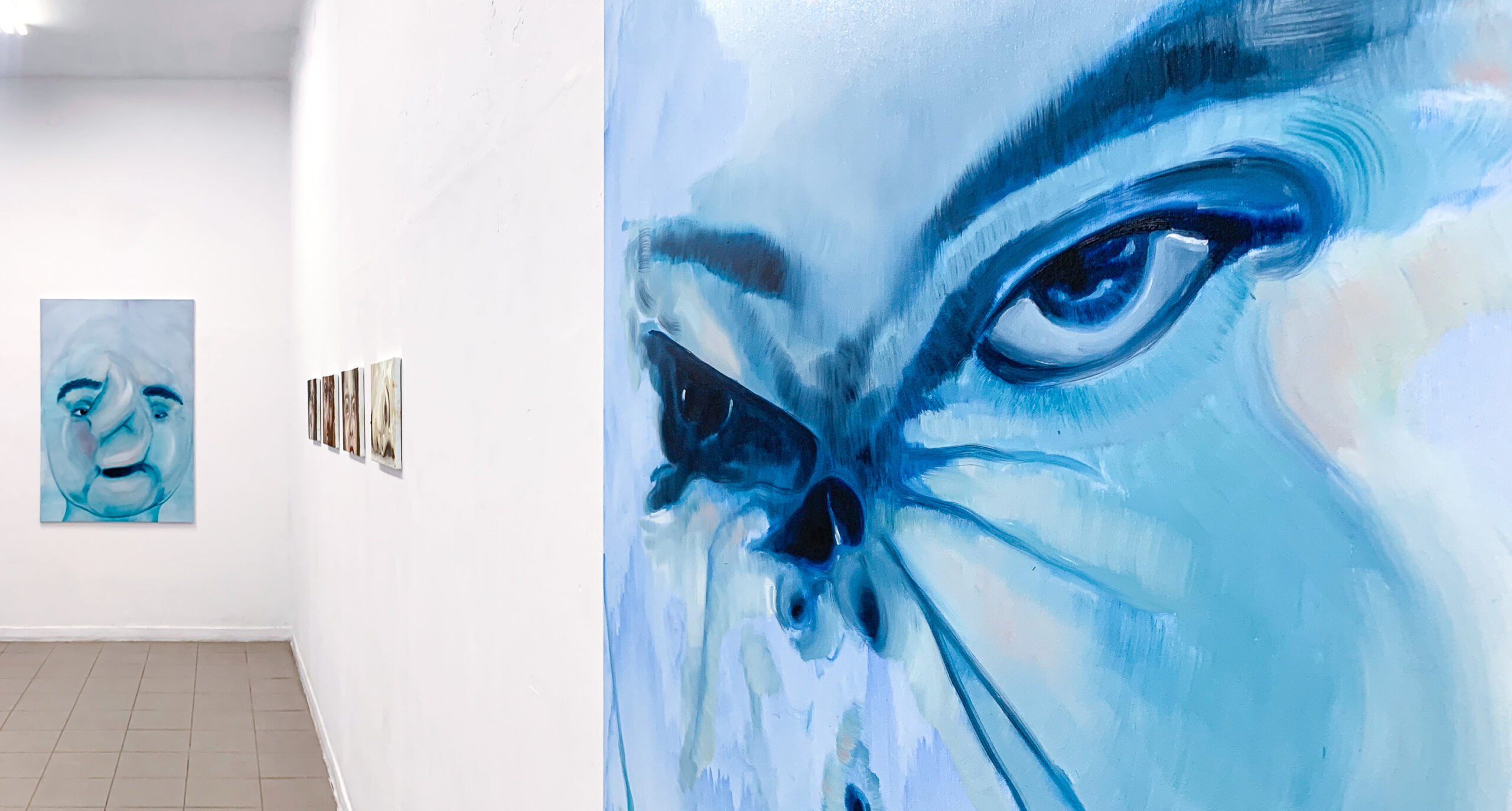
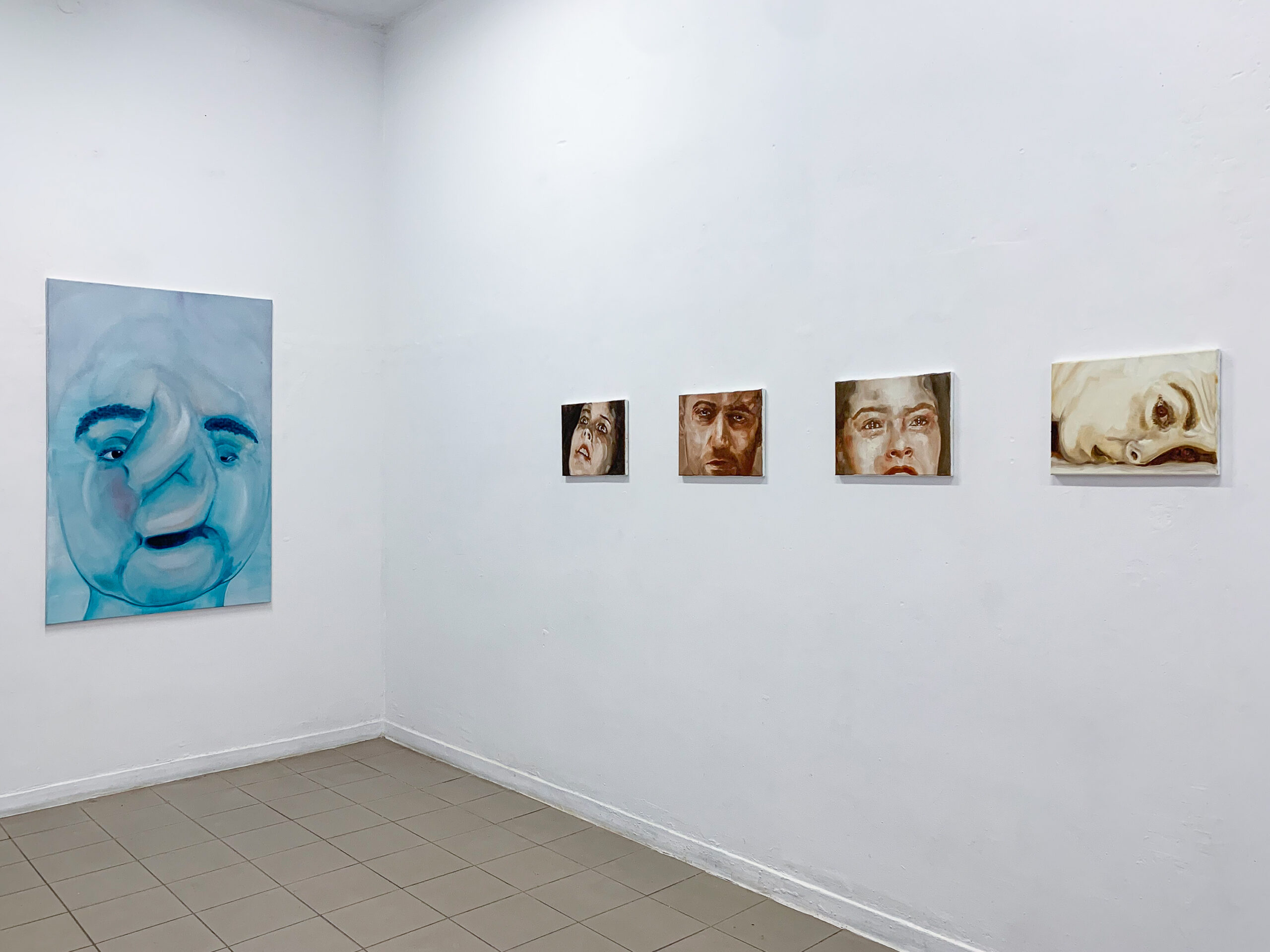
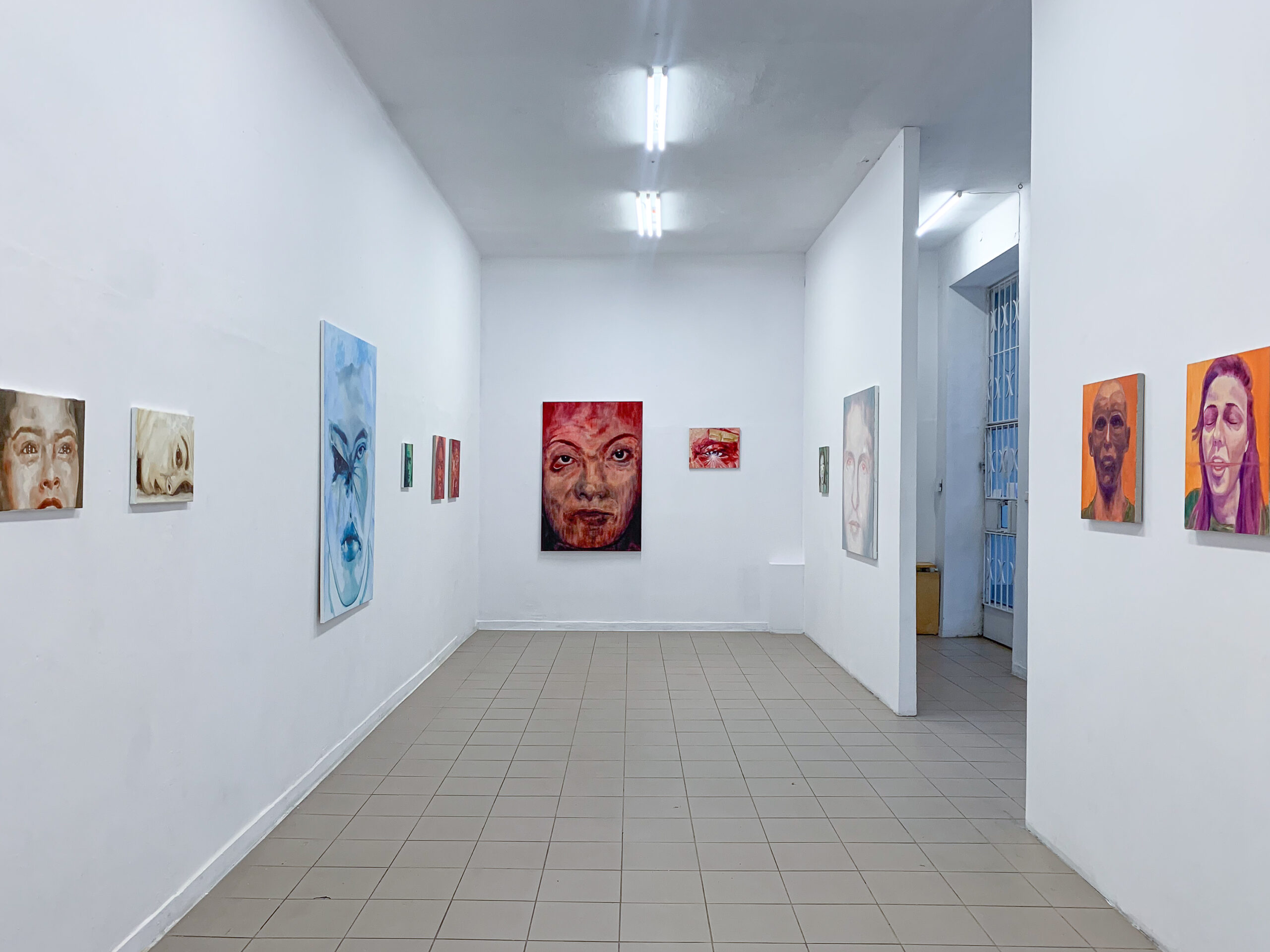
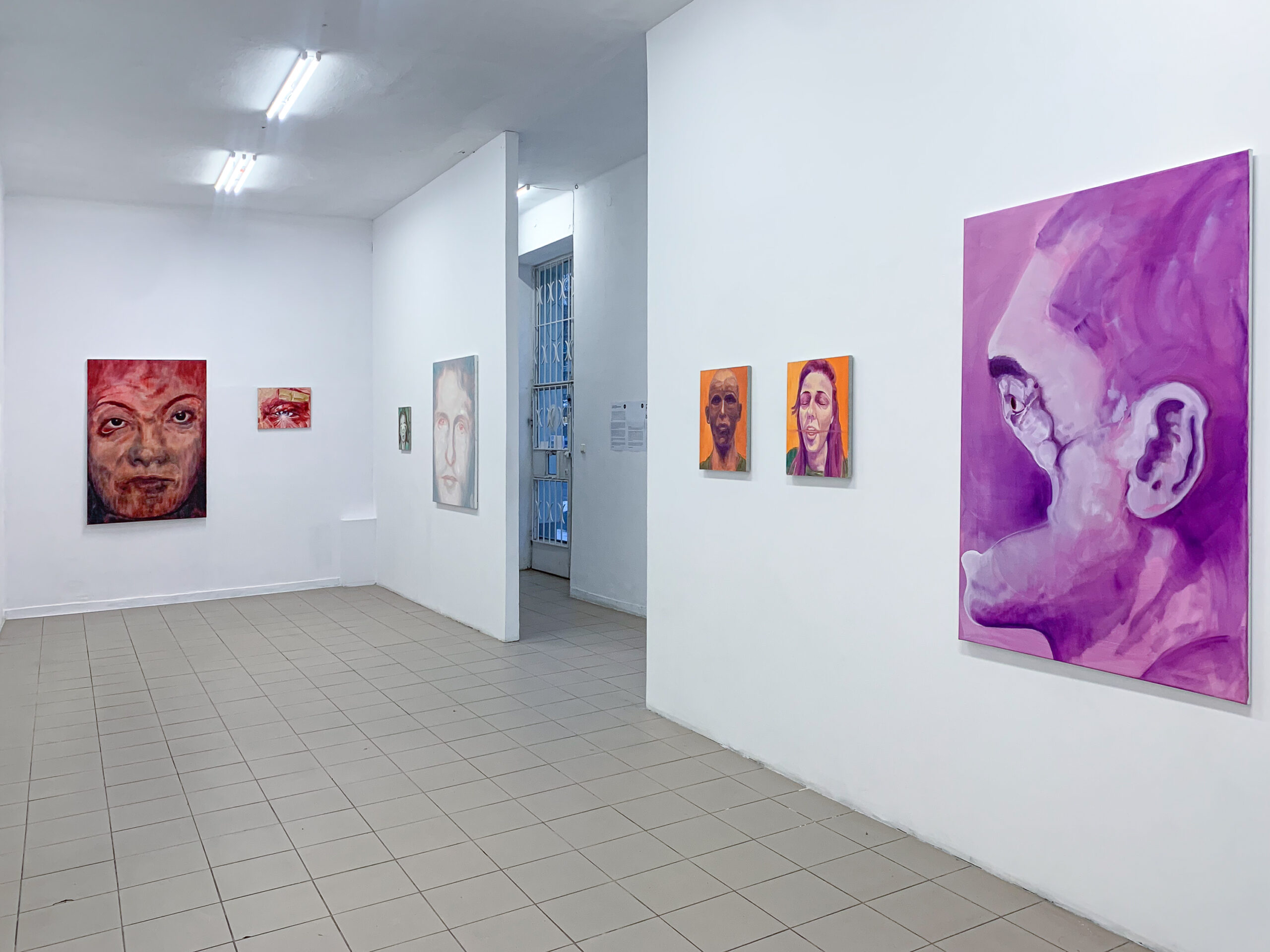
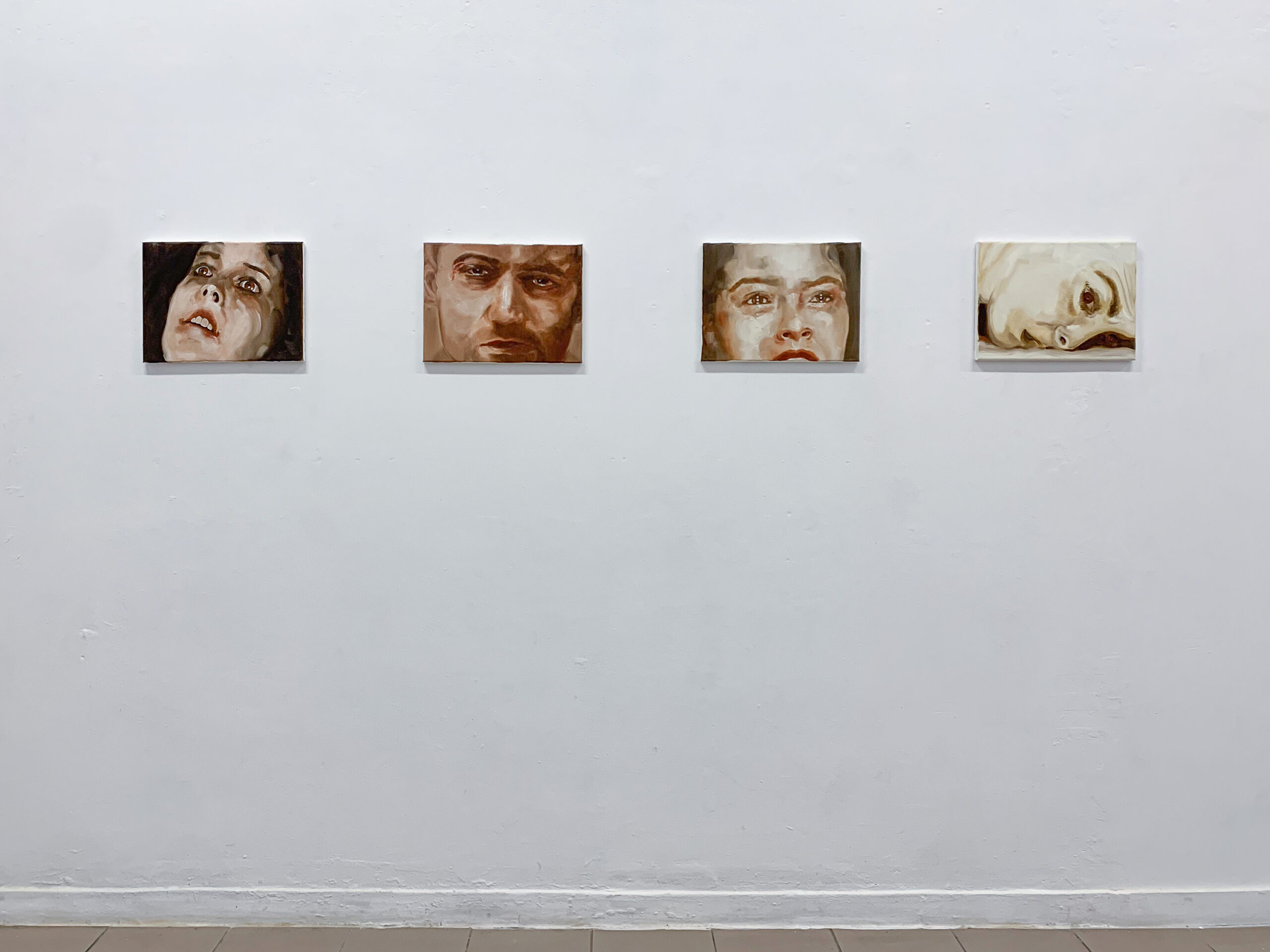
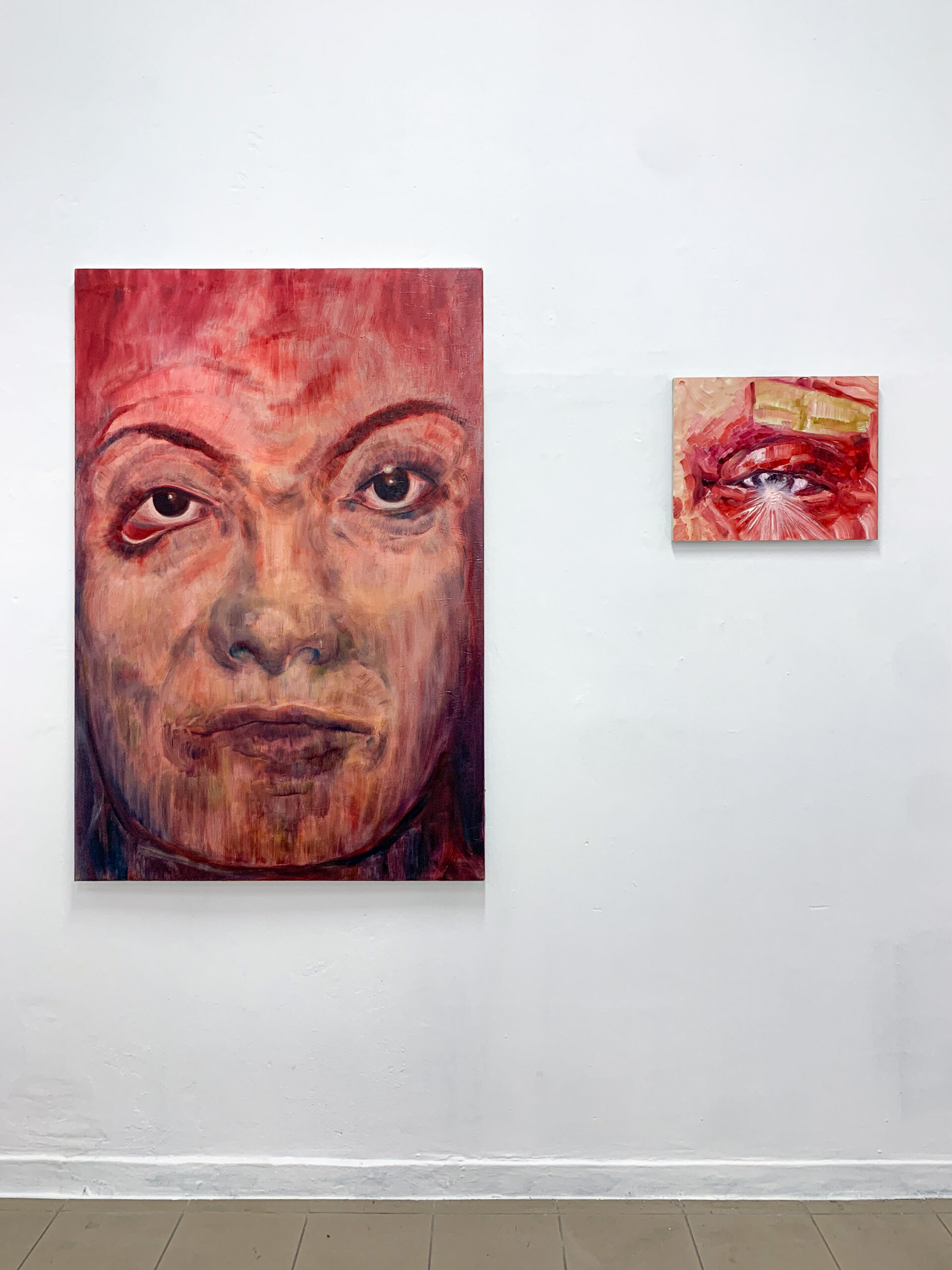
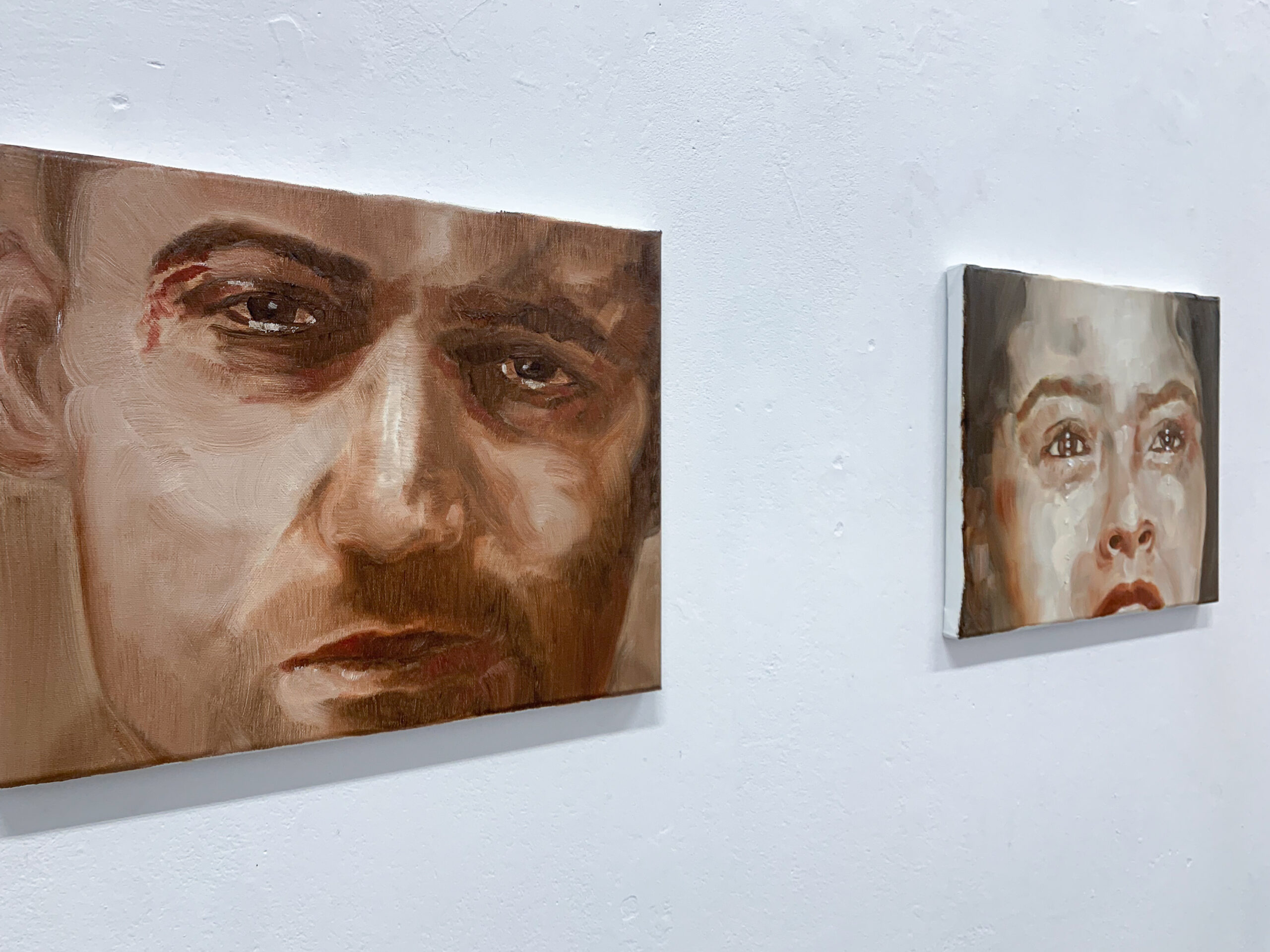
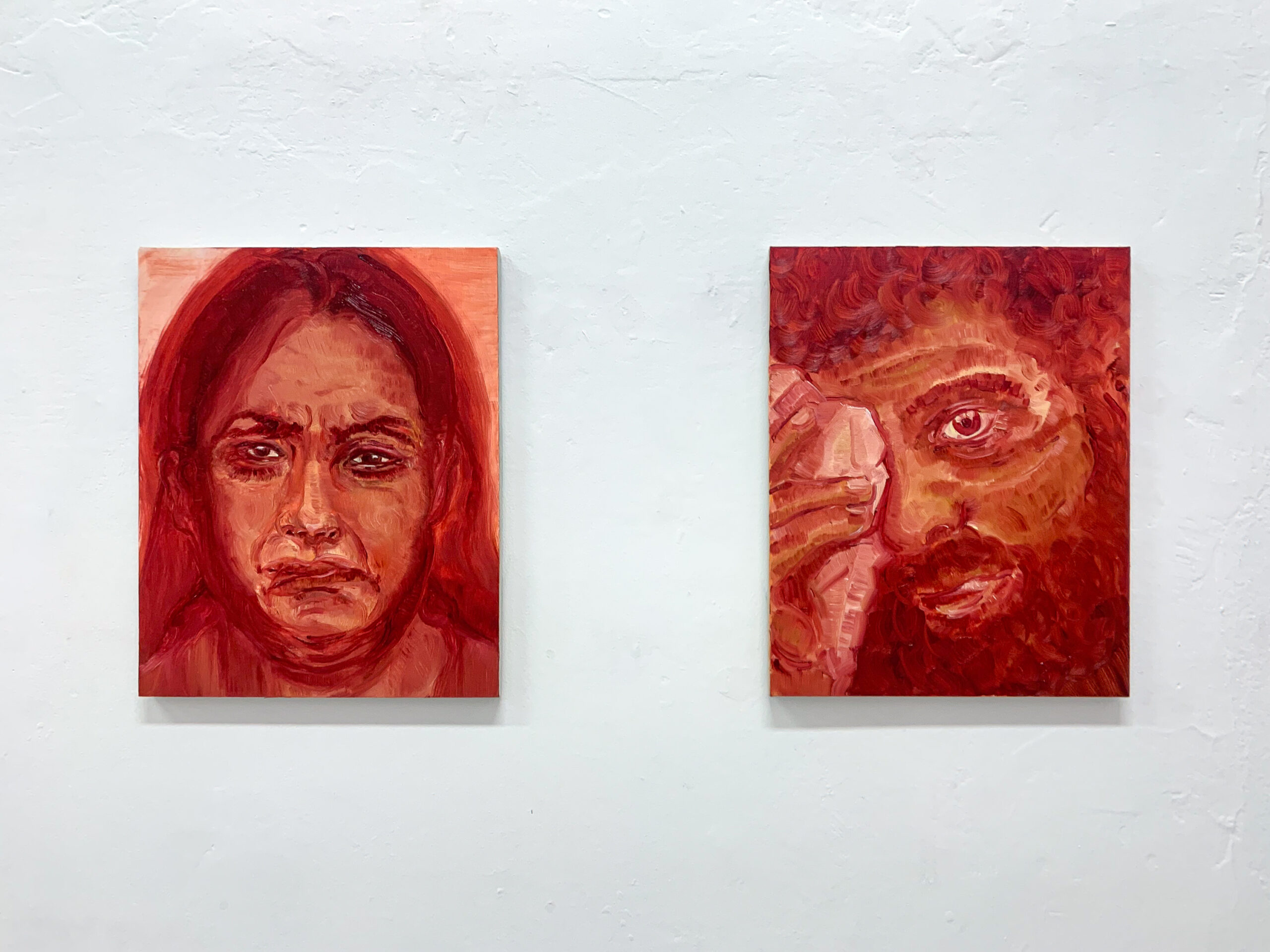
Twarze w obrazach Łukasza Dziedzica, zresztą jak każde inne, to palimpsesty, czyli miejsca nadpisywanych na siebie historii, na przykład swojej własnej na historię rodzinną, takie mapy współwiny, ale i wybaczenia. W projekcie “A kiedy na mnie patrzysz” traumy związane z dosłownymi urazami twarzy są traktowane również w pewien sposób symbolicznie, są wizualnymi przedstawieniami ciężkich doświadczeń, które nosimy w sobie.
Twarze malowane przez Dziedzica mogą być interpretowane powierzchownie jako nieprzyjemne estetycznie przedstawienia. Psychologicznie jako wyraz złych doświadczeń, przeżytych lub odziedziczonych traum. Jednoznacznie jako dokumenty, świadectwa krzywd wyrządzonych twarzom przez świat lub w wyniku autoagresji. Skoro każda twarz to zapis jakiejś przemocy, tym samym Dziedzic pyta: ile twarz może znieść i w którym momencie człowiek ją traci.
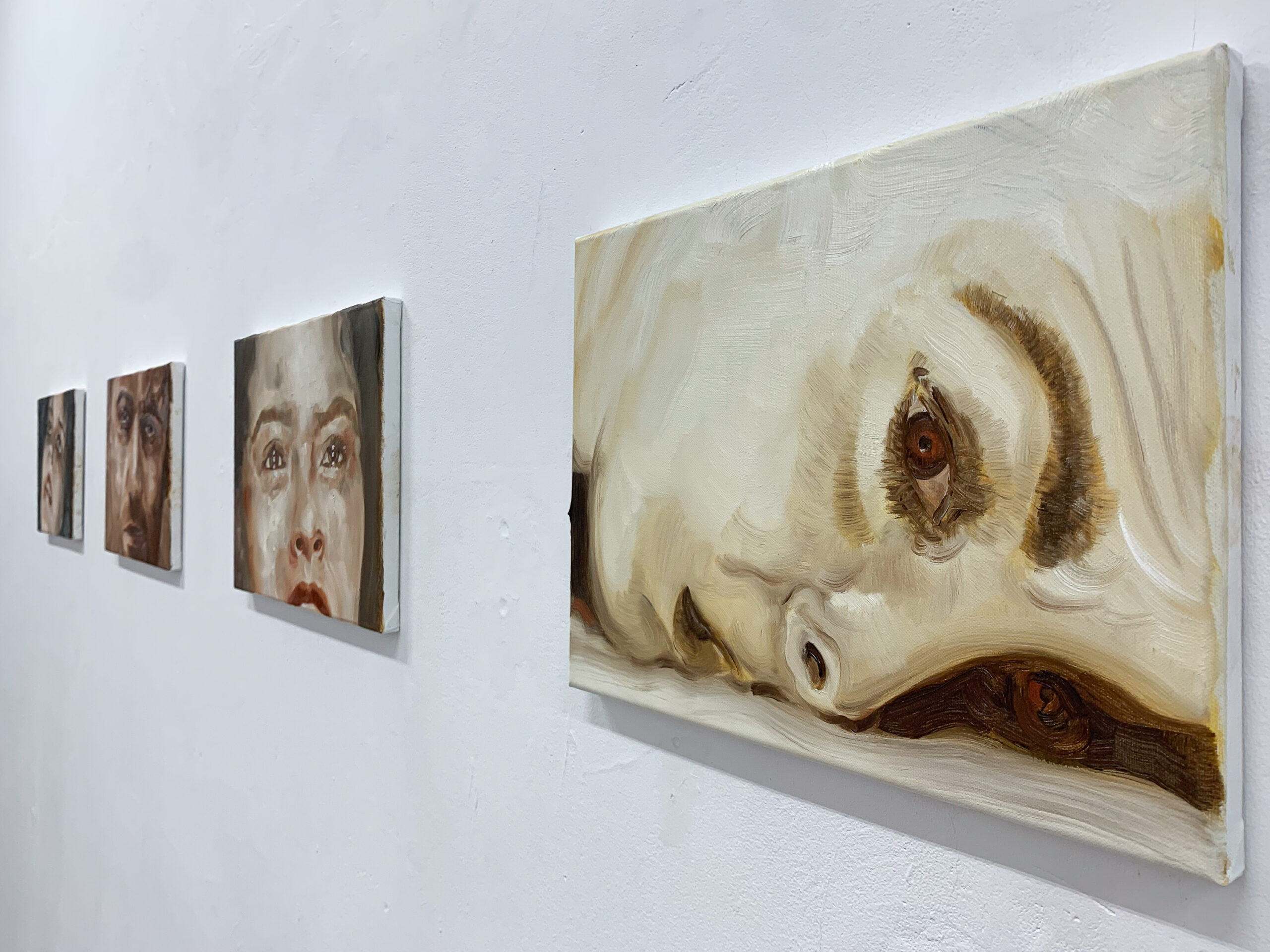
Niektóre z portretów artysta odrealnia i estetyzuje. Jak gdyby chciał, aby wywoływały sprzeczne emocje. Jak gdyby ważna była dla niego niepewność ich odbioru.
Projekt malarski “A kiedy na mnie patrzysz” wydaje się też być reakcją na aktualną sytuację społeczno-polityczną: konflikty zbrojne, pandemie i wirusy, izolację, ciężkie zbiorowe doświadczenie lęku i niepewność.
Tekst: Justyna Tomska
EN
Portrait is one of the oldest, most obvious painting themes. After all, it is with our faces that we enter the world. The face is the first element we see when we meet a person, often before a word appears, a question is asked. Through the experience of standing face to face, we become witnesses of a presence that is unique, Emmanuel Levinas, a French philosopher, once wrote. According to him, meeting the face of another should evoke responsibility for it, because we see suffering in it, which awakens the impulse to protect. But this face, which is supposed to arouse concern, often becomes a target of violence.
The faces in Łukasz Dziedzic’s paintings, like any other, are palimpsests, i.e. places of history being overwritten on one another, for example one’s own history on the family history, such maps of shared guilt, but also of forgiveness. In the project „And when you look at me”, traumas related to literal facial injuries are also treated symbolically in a certain way, they are visual representations of difficult experiences that we carry within us.
The faces painted by Dziedzic can be interpreted superficially as aesthetically unpleasant representations. Psychologically as an expression of bad experiences, experienced or inherited traumas. Clearly as documents, testimonies of harm done to faces by the world or as a result of self-aggression. Since every face is a record of some violence, Dziedzic asks: how much can a face endure and at what point does a person lose it?
The artist makes some of the portraits unreal and aestheticizes them. As if he wanted them to evoke conflicting emotions. As if the uncertainty of their reception was important to him.
The painting project „And when you look at me” also seems to be a reaction to the current socio-political situation: armed conflicts, pandemics and viruses, isolation, severe collective experience of fear and uncertainty.
Text: Justyna Tomska
And When You Look At Me / A kiedy na mnie patrzysz